- February 16, 2026
Most people tend to believe asphalt is a hard, durable material, but the reality is that asphalt starts to decay very soon. Long before any damage is visible, cracks and oxidation can take place. The issues could already be on a rapid path of expensive repairs or substitution by the time they are identified.
The knowledge of asphalt lifespan is very important in budget planning and maintenance scheduling. When property owners understand what influences asphalt’s life, they can take positive measures to increase asphalt life, minimize their repair expenses, and eliminate unnecessary resurfacing or complete replacement.
What is the Average Life of Asphalt?
Although asphalt may be useful in 15-30 years, its durability depends widely on the usage and location. The asphalt surfaces experience varying degrees of stress depending on the different environments and traffic requirements.
The Reason Why the Life of Asphalt Varies
Traffic intensity, weight of load, drainage, and frequency of maintenance reduce the difference in the lifespan. Even a minor used residential driveway that is regularly sealed off will last a long time in comparison to a commercial parking lot that receives daily truck traffic and exposure to oil, fuel, and standing water.
Instead of using a specific number of years for lifespan, the durability of asphalt needs to be measured using the conditions of use and preventive measures.
What Shortens Asphalt’s Life?
Asphalt does not get damaged overnight but is damaged due to many factors that act in a slow manner to degrade the surface and the base. With the combination of these factors, the pavement failure becomes very fast.
Inadequate Base Preparation
The asphalt lifespan is based on the foundation.
-
Uncompaction causes air pores and loose support of the load.
-
Poor sub-base permits movement and consolidation.
-
Wrong thickness of asphalt does not distribute weight uniformly.
This means that a weak base will be cracked, sink, and develop potholes within a period of a few years.
Climate & Weather Extremes
Weather is a contributor to the degradation of asphalt.
-
Freeze-thaw cycles will make the water increase in size within the cracks and crack asphalt.
-
Severe heat increases the rate of oxidation, making binders dry.
-
The moisture can be penetrated and eroded by rain, snow, and humidity.
Areas with varying temperatures have rapid fatigue of the pavement as compared to the mild areas.
Heavy Traffic & Load Stress
Direct effects of traffic weight are on asphalt performance.
-
Commercial trucks have a lot greater stresses as compared to passenger cars.
-
Constant heavy loads lead to rutting, cracking, and surface fatigue.
-
Turning and braking road surfaces wear out faster than straight roads.
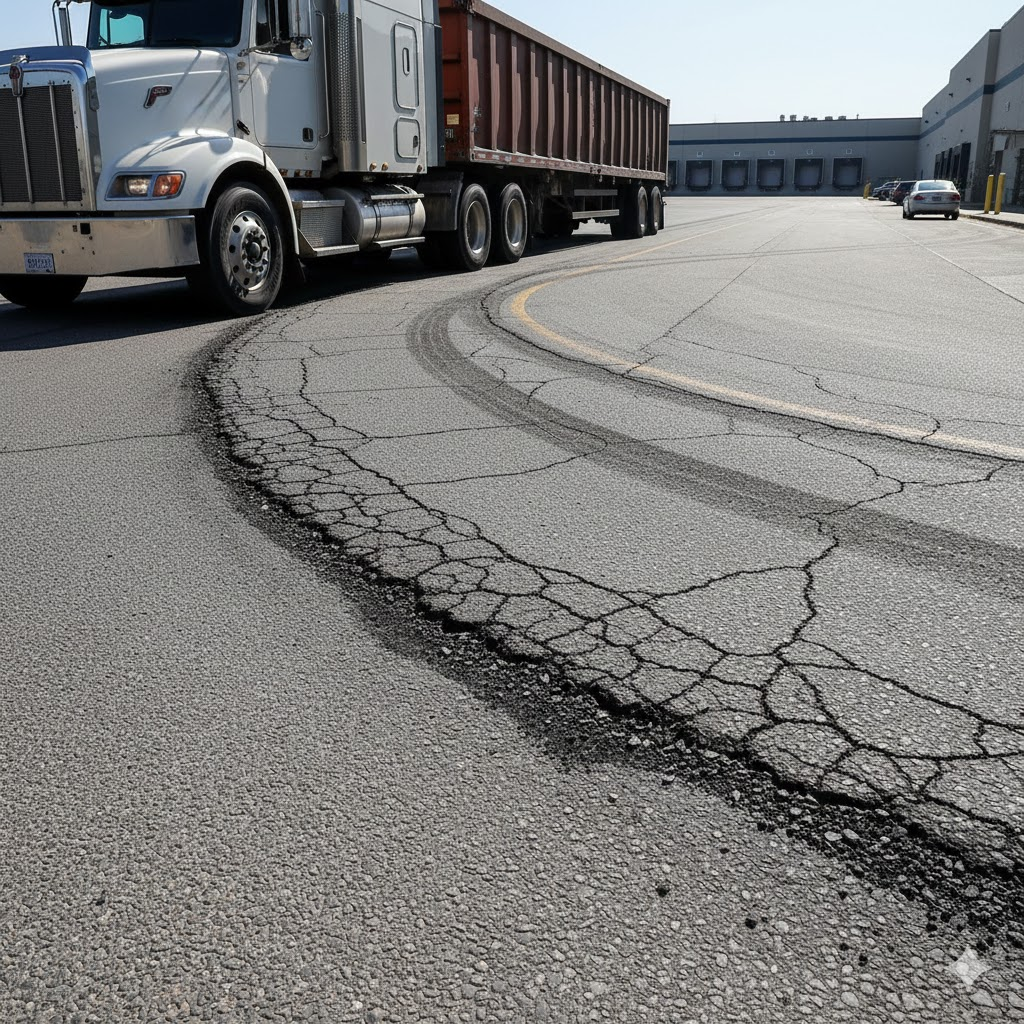
Asphalt used in light residential areas will not last long with commercial traffic.
Water Penetration and Substandard Drainage.
The biggest enemy of asphalt is water.
-
The running water leaks through the cracks and joints.
-
The presence of moisture undermines the layers of the surface.
-
The sub-base is eroded, causing potholes and structural collapse.
Even well-laid asphalt decays quickly without proper drainage.
Lack of Routine Maintenance
Asphalt that is not maintained decays at a higher rate.
-
Oxidation and moisture damage are permitted by omitting sealcoating.
-
Delayed repairs of the cracks allow water percolation to go deeper.
-
The moisture gets stuck on the surface by deposited rubble.
-
Asphalt surfaces can be doubled in terms of usable life when done on a regular basis.
Sun Exposure & UV Damage
The damage caused by the sun does not only involve appearance.
-
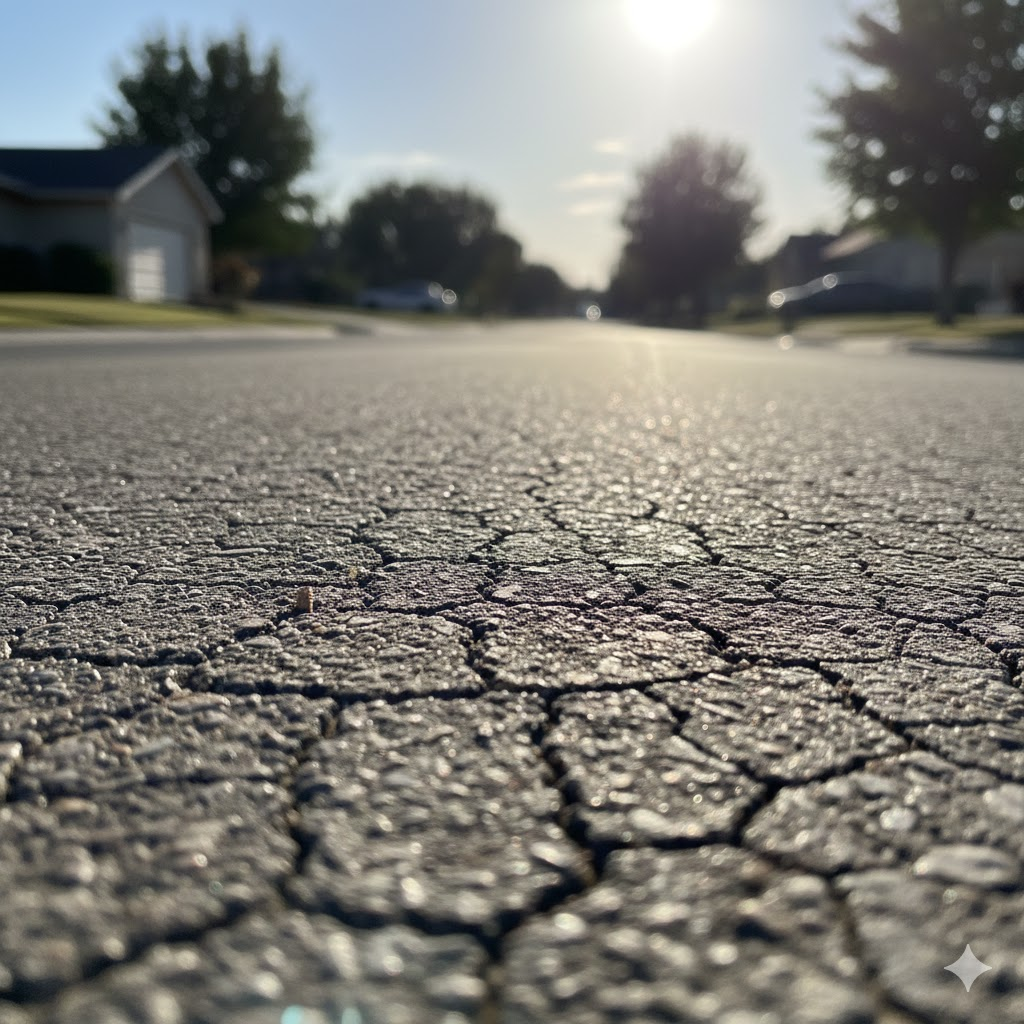
The UV rays oxidize the asphalt binders.
-
The surfaces get brittle and susceptible to cracking.
-
Fade-in colors are a sign of structural drying and not a sign of cosmetic wear.
-
UV damage diminished the flexibility, causing asphalt to be susceptible to cracking under the stress.
Quality and Material of Asphalt Binders
All asphalt mixes do not do well.
-
Poor quality binders degenerate at a quick rate.
-
Inappropriate mixes, which are climate-inappropriate, do not work in the local weather.
-
Homogenous asphalt is not resistant to harsh conditions.
-
Climate-specific and high-quality asphalt mixes are very important in making pavements last longer.
The Effect of These Factors
The failures of most asphalt are not due to one problem only. Inadequate installation together with traffic and water penetration compounds degradation exponentially. Lapsed maintenance thereupon seals the destiny of the pavement.
Knowledge of these factors enables the property owners to avoid damage rather than repair it, which decreases short-term expenses and increases the life of asphalt.
Regular upkeep saves money over time—this parking lot asphalt maintenance guide shows how preventative care reduces repair costs.
The Lifecycle of Asphalt: What to Expect at Each Step?
Asphalt does not fall apart unannounced; it develops in phases. Knowing the stage of life that your pavement is in helps you implement the appropriate maintenance at the appropriate time, which saves you on unwarranted expenses.
Early Life (0-5 Years):
The new asphalt is soft, well bonded, and aesthetically smooth. During this phase:
-
Pavement is crack resistant and water resistant.
-
Surface defects may occur but are minor in nature and are often cosmetic in nature.
-
Planning on preventive maintenance is to be done early.
Best tip: Early on, avoid heavy weight and strategize future sealcoating.
Maintenance Phase (5-10 years):
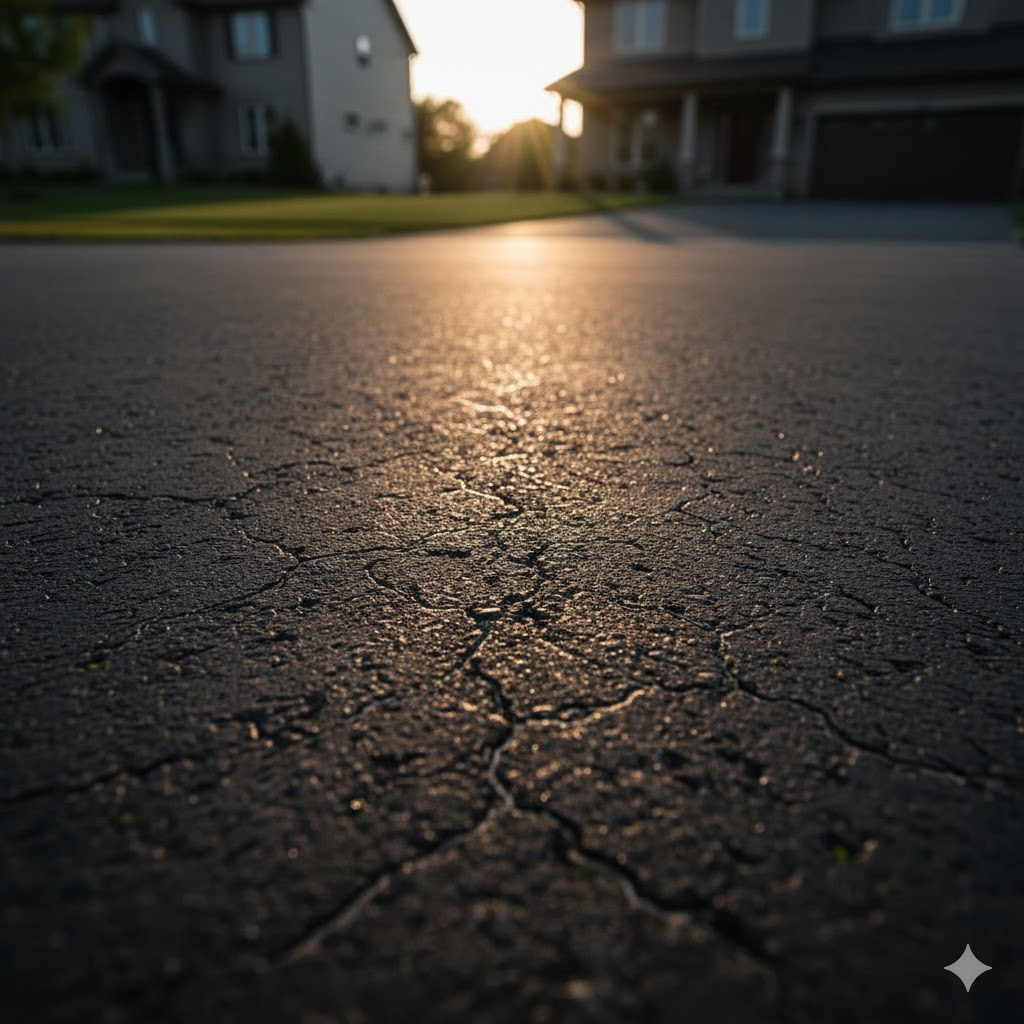
With aging of asphalt, oxidation is initiated, and little cracks can occur.
-
Cracks in the hairline are observed.
-
The surface begins to lose the natural oils.
-
Sealcoating is necessary to reduce the rate of deterioration.
Best tip: Seal cracks and seal cracks immediately in order to cover the bottom.
Mid-Life Damage (10-15 Years):
This phase is characterized by apparent damage.
-
Cracks widen and multiply
-
Surface depressions can develop or potholes.
-
Drainage problems are made more apparent.
Best option: Repair, patching, and resurfacing to recover performance.
Late-Life Decadence (15–25 Years):
-
The frequency and effectiveness of repairs are increased.
-
Weaknesses in the structure manifest themselves.
-
Between repairs, the failure rate increases.
-
The price of maintenance increases significantly.
Best tip: Review surging versus replacement of the base in accordance with conditions of the base.
End of Service Life (25 and above years):
-
At this stage, the surface is not safe anymore.
-
Much cracking and base failure.
-
Poor and uneven road surface.
-
Repairs offer minimal value.
Best tip: Completely remove and refurbish long-term safety and performance.
Signs Your Asphalt’s Life Is About to End
There are signs of asphalt that can be at the point of being out of life. The identification of these at the initial stage will assist you in selecting the cheapest option.
Common Warning Signs
-
Alligator cracking, which is a sign of base failure.
-
Same potholes even after being repaired.
-
Oxidation fades severely and is brittle.
-
The chronic drainage problems or stagnant water.
-
Uneven or warped surfaces
-
The separation of loose aggregate off the surface.
-
Increased repair expenses, lowered outcome.
Which treatment is better?
Repair: There is minor isolated damage on a stable base.
Resurface: General surface damages due to solid underlying foundation.
Replacement: Structural failure, base erosion, or repeated repair failures.
How to Extend the Life of Asphalt
Regular and active maintenance may also extend the life of asphalt considerably and lower the cost of the operation over time. The ones that have been proven to offer the most optimum returns on the investment are listed below.
Sealcoating Every 3–5 Years
Shields asphalt against UV rays, oxidation, moisture, and chemical spills can retard aging of the surface.
-
Immediate Crack Sealing
-
Keeps out water penetration prior to cracks spreading and rupturing base layers.
-
Periodic Drainage Inspections.
-
Maintains the flow of water off pavement to minimize erosion and structural collapse.
-
Frequent cleaning and removal of oil stains.
-
Eliminates debris and petroleum products, which break down asphalt binders.
Load Management
-
Reduces heavy vehicle traffic and eliminates cracking and rutting that result in stress.
-
Professional inspections on an annual basis.
-
Determines the problems at an early stage before they turn to serious repairs.
-
Best Snow Removal Methods.
-
Resistant to surface gouging and reduces freeze-thaw damage in winter seasons.
Asphalt Resurfacing vs. Replacement
Among the most prevalent questions that property owners are often asked is whether to resurface or do away with it when asphalt is old. The correct decision will be based on the quality of the base, the amount of the damage, and the cost-effectiveness in the long run.
Need of Asphalt Resurfacing
Asphalt resurfacing entails laying a new asphalt over the old surface after making the required repair. It is best when it is built on a sound structure.
The possibility of resurfacing is usually appropriate to:
-
The cracking is common and confined to the surface.
-
The bottom is free of failure and erosion.
-
There are few potholes and depressions that can be repaired.
-
Drainage problems have been rectified.
-
The pavement is not very old, and it is still stable.
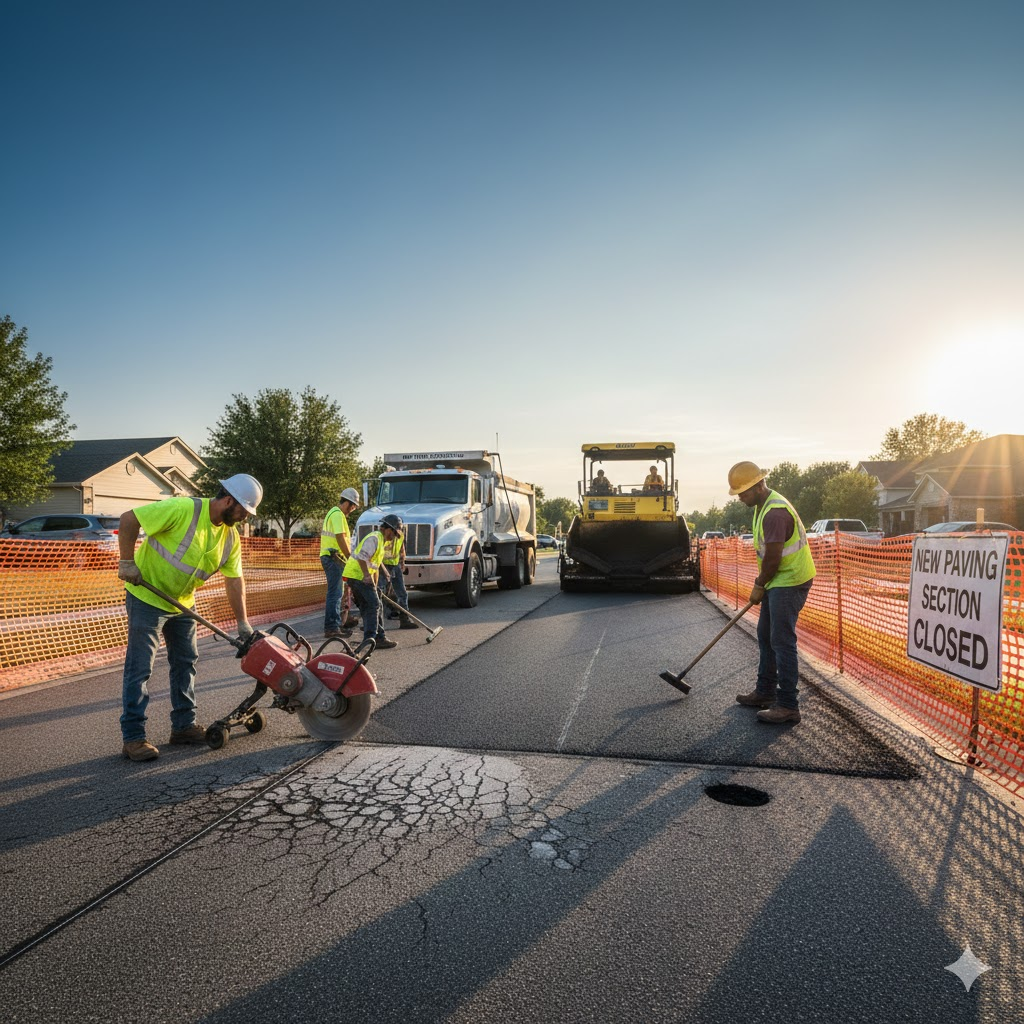
Why resurfacing works:
It leveled and enhanced the look and increased the life of pavement by 10-15 years at a small fraction of the replacement cost.
Full Replacement of Asphalt Surface
Complete asphalt replacement involves the removal of the existing asphalt, replacement of the base, and installation of a new pavement. Although costlier in the short term, it is the only solution in the case of structural integrity.
The replacement is needed in case:
-
Large areas are covered by alligator cracking.
-
Potholes reoccur even after repair.
-
The surface is disproportionate, depressed, or distorted.
-
Base erosion has been occasioned by drainage issues.
-
Past overlays have been unsuccessful.
Conclusion
The asphalt is a combination of a correct installation, materials, and continuous maintenance. Any asphalt will not last long when the foundation of the asphalt is fragile. Asphalt life is also compromised when the asphalt is not well taken care of in its routine maintenance. A professional assessment will make you save money and maintain the safety of your pavement.
Get a professional asphalt inspection scheduled today to find out the level of your pavement and take the correct decision before minor problems turn into massive costs. Call at 404-414-7192 or visit New Pointe Contracting for a quick free estimate.
.webp)