- January 05, 2026
Care and maintenance that result in a well-maintained, clean, and smooth surface are a sign of professionalism and attention to safety and concern, whereas broken or rough pavement warns at once of neglect and insecurity. Other than aesthetics, damaged asphalt poses a risk of trips, damage to vehicles, and legal liability, which may lead to insurance claims or legal suits. Scheduling proactive maintenance of the asphalt minimizes such dangers, and a good brand image is preserved.
The Reason Why Asphalt Crashes Sooner than Expected
Most property owners believe that asphalt is a set-it-and-leave-it natural surface, yet asphalt starts to age as soon as it is laid down. Sunlight, the infiltration of moisture, the loads of the vehicles, and the changes in temperature gradually deteriorate the surface and base layers. Unless minor surface defects are repaired in time, minor surface defects turn into structural failure, significantly reducing the projected lifespan of pavement.
The Real Mechanism of Asphalt Deterioration
The knowledge about the breakage of asphalt allows the property owners to make the appropriate move at the appropriate time.
UV Oxidation Weakens the Work Surface
The sun is slowly oxidizing the asphalt binder that makes pavement stick together using ultraviolet rays. As the oxidation continues, the asphalt becomes brittle and loses its elasticity and begins to crack. It is also a slow yet tenacious process that occurs particularly in unsealed surfaces, and thus sealcoating is an important protective action against asphalt damage due to UV oxidation.
Underground Water Intrusion
Water can be considered as one of the most devastating enemies of asphalt. When moisture finds its way through the cracks or unsealed pavements, it seeps into the underlying layers of the pavement. This undermines the structure and causes settlement, potholes, and surface collapse. This is increased by poor drainage, particularly in the high-traffic places.
Freeze-Thaw Cycles Increase Existing Damage
In low temperatures, the water gets trapped and freezes and expands under the surface, causing cracks to enlarge and extend. The increase in temperatures leads to the melting of the ice, leaving gaps, which leads to additional instability. Freeze-thaw cycles repeated many times cause pavement failures to be initiated dramatically, provided that the cracks are not sealed early.
Traffic Load and Stress Concentration
The daily traffic exerts continuous pressure on the asphalt, especially at entrances, turning areas, and loading bays. The hard machinery beats the pavement, and heavy vehicles and sharp turns rip apart the surface. This stress over time leads to rutting, surface fatigue, and structural breakdown in case of failure to maintain the asphalt.
The Actual Price of Not Maintaining Asphalt Surfaces.
Not paying attention to the maintenance of asphalt does not save money but increases the costs in the future.
Small Cracks to Major Damages
The cracks on the surfaces might be minute, though they open the door to severe structural problems. When water is absorbed in the pavement layers, the pavement wears out at a fast rate at the bottom, and most of the time the wear and tear will not be realized until it becomes impossible to avoid severe damage. The potholes appear when it is already too late because the underlying base is already damaged.
Liability, Insurance, and Legal Exposure
Cracked asphalt increases the chances of trips, falls, and vehicle collisions and leads to liability claims and insurance claims against property owners. The lack of well-maintained parking lots is commonly brought up in court cases, which makes regular asphalt maintenance one of the most important risk-management measures and not an unnecessary cost.
Effects on Property Value and Satisfaction of Tenants
Properly maintained pavements will improve the aesthetic appeal, retention of tenants, and property value. On the other hand, degrading asphalt is an indicator of negligence, and it may affect the decision to lease negatively and the customer perception and general asset valuation. In the case of commercial real estate, the state of pavement does directly influence the perception of the business.
Active versus Passive Maintenance of Asphalt
The distinction between proactive and reactive asphalt care will define the amount of your expenses to be paid, the duration of your pavement life, and the frequency of operation interruptions.
Learning About Proactive Maintenance
Proactive asphalt maintenance is concerned with timely maintenance and early detection. This strategy involves frequent check-ups, crack lidding, seal coating, drainage control, and clean-ups carried out on the surface before the damages are so tough. Proactive maintenance allows maintaining the structure intact, lengthening the service life of pavements, and eliminating sudden failures that necessitate emergency repairs by dealing with the problems at the initial stage.
A Case Study of What Reactive Repairs Are
The reactive repairs are only done when the damage is so severe that it can no longer be ignored. Large cracks, potholes, and surface collapses demand urgent corrective actions, usually in a time-sensitive manner. Such repairs are normally more costly since they correct the signs as opposed to the causes, and they seldom reinstate complete pavement functionality. The reactive maintenance can tend to reduce the pavement life span as opposed to increasing it.
The Reason Why Waiting Is Always Expensive
Postponement of asphalt maintenance will magnify tiny hiccups. Given the minor cracks, water can infiltrate them and make the bottom layers weak, resulting in massive failure. What would have been fixed with a cheap sealing solution will end up in patching, resurfacing, or wholesale replacement. Delay enhances the extent of repair, labor, material, and financial liabilities.
Exploration of Core Asphalt Maintenance Services
All types of asphalt repair services are defined by a certain contribution to the prevention of decay and the increase of the pavement life.
Crack Sealing & Crack Filling
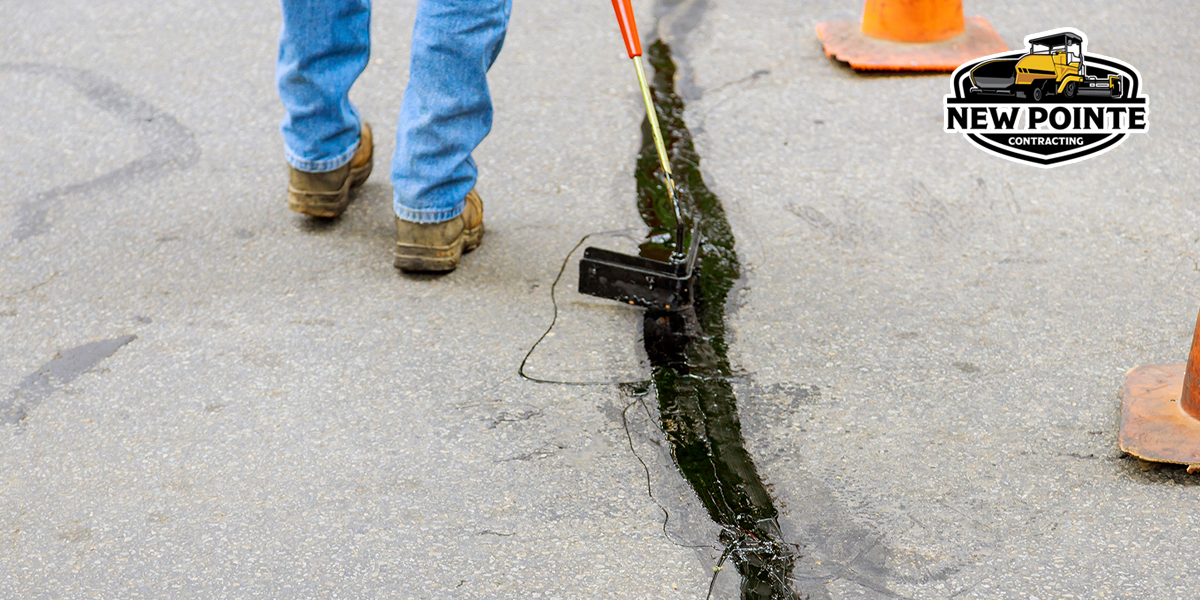
The use of crack sealing and crack filling takes the surface openings prior to their destructive role on the pavement structure. Crack filling is applied on smaller cracks that are non-moving, and the concentration is on preventing entry of water. Crack sealing involves the use of rubberized and flexible materials that swell and shrink with the change of temperature, making it suitable for working cracks. The timely and appropriate method will avoid the moisture intake and reduce the speed of the structural destruction.
Sealcoating
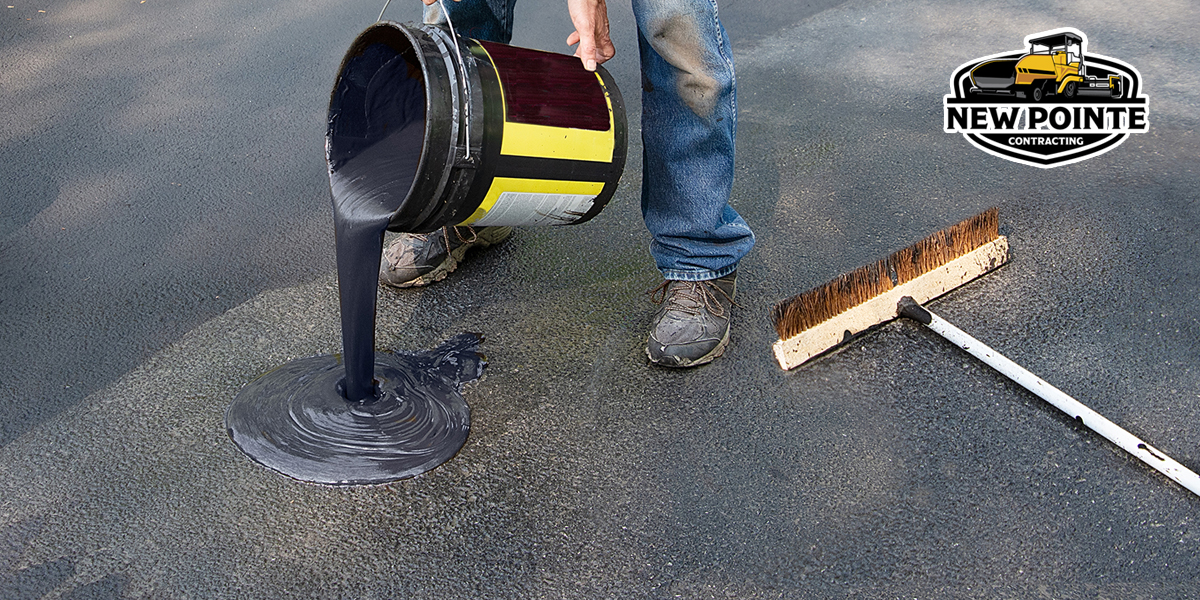
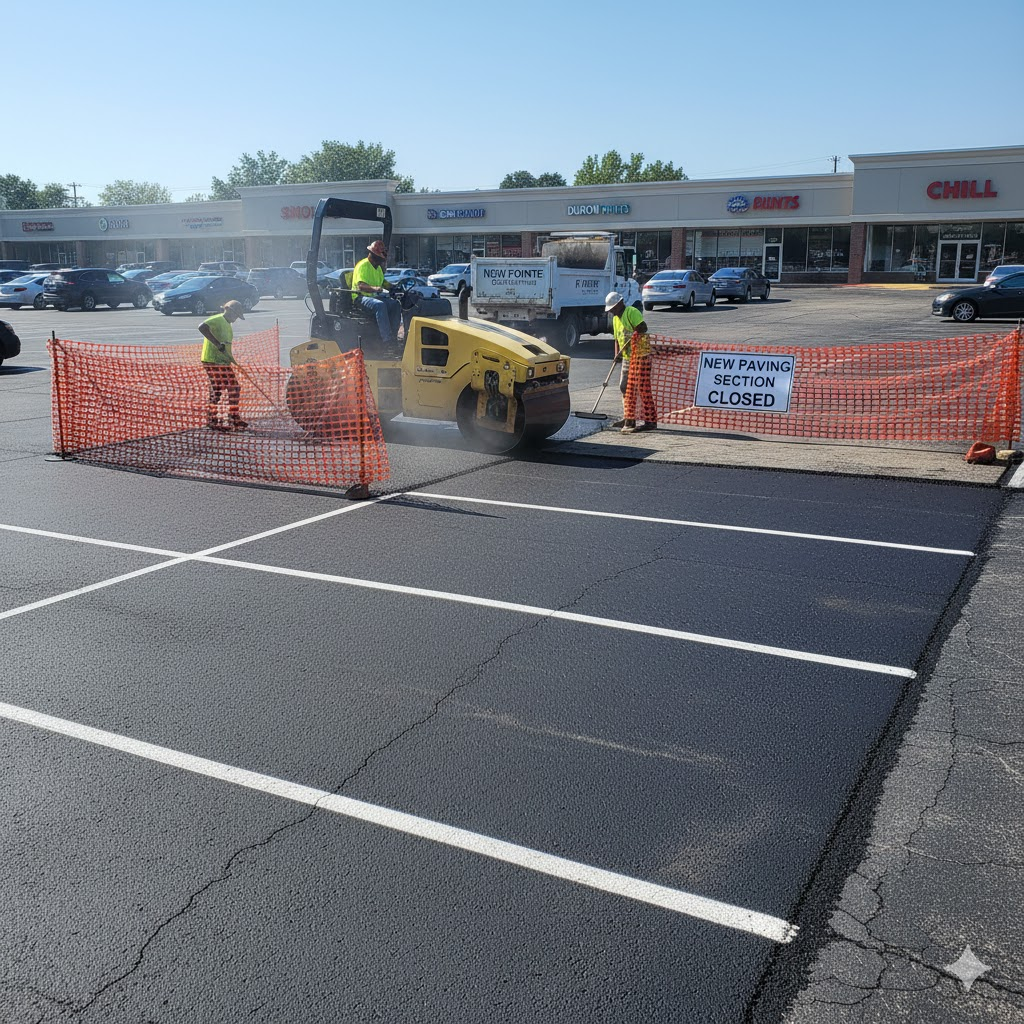
Sealcoating prevents UV rays, oxidation, oil spills, and exposure to moisture. It rejuvenates the surface of the asphalt and reduces aging and hardness of the surface. The majority of the commercial and residential asphalt surfaces are good after every two to three years of sealcoating, as per the volume of traffic and weather. This is because regular sealcoating will save on pavement life and postpone major repair.
Pavement Marking and Line Striping
Linear line striping enhances traffic flow and promotes safety and also ensures that the parking lots are in compliance with local regulations. The faded or non-specific markings enhance the risk of accidents and decrease accessibility. Well-maintained striping will facilitate the internet usage of ADA requirements, as the parking spaces, fire lanes, and pedestrian routes will be indicated explicitly.
Asphalt Maintenance Schedule (What to Do & When)
Maintenance of asphalt is in a basic plan according to the age of pavement, its exposure to traffic, and the environmental factors. Emerging asphalt should be monitored and given light treatment in the initial stages of curing, whereas old surfaces have to be inspected more frequently, cracks sealed, and coating applied to the surface. The ability to stay ahead of deterioration means that the property owners can be in a position to remedy the problems at an affordable and efficient time.
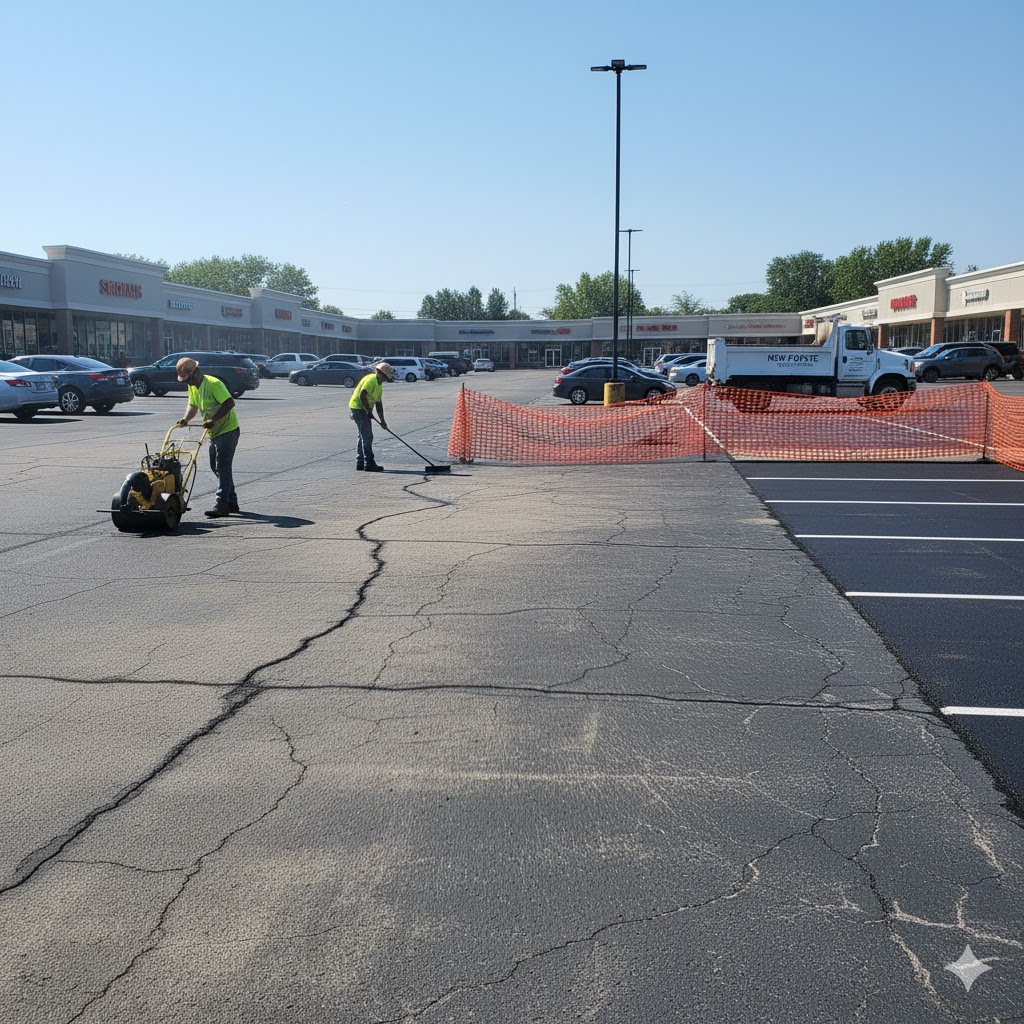
The specifics of new asphalt are early control and inspections and prevention of minor cracks, and old asphalt needs regular sealing, patching, and examination. Maintenance rate also varies according to the type of property. The commercial lots require increased care owing to the higher traffic concerns, and residential driveways adopt a longer maintenance process with reduced stress points.
Seasonal Asphalt Maintenance Strategy
Asphalt performance is subject to each season with its own challenges. The maintenance in the spring will solve winter damage, clear debris, and detect cracks due to freeze-thaw cycles. Summer specializes in sealcoating, line striping services, and surface protection against UV oxidation and surface softening due to heat.
Fall preparation serves to avoid damages in cold conditions by covering cracks and clearing organic debris prior to the cold weather. The existence of winter maintenance is focused on safe snow removal routines and adequate drainage to avoid gouging of water pools and surfaces. Climate-based planning guarantees that asphalt is not exposed to climatic conditions throughout the year, despite the weather extremes.
Cost-Effective Asphalt Maintenance Planning
Bundling the services of crack repairing, sealcoating, and line stripping is one of the beginning stages of cost-effective asphalt repair in terms of lowering the costs of labor and downtime. By enhancing priority to high traffic areas, it means that the areas that may likely be damaged are addressed initially so that there is no extensive deterioration.
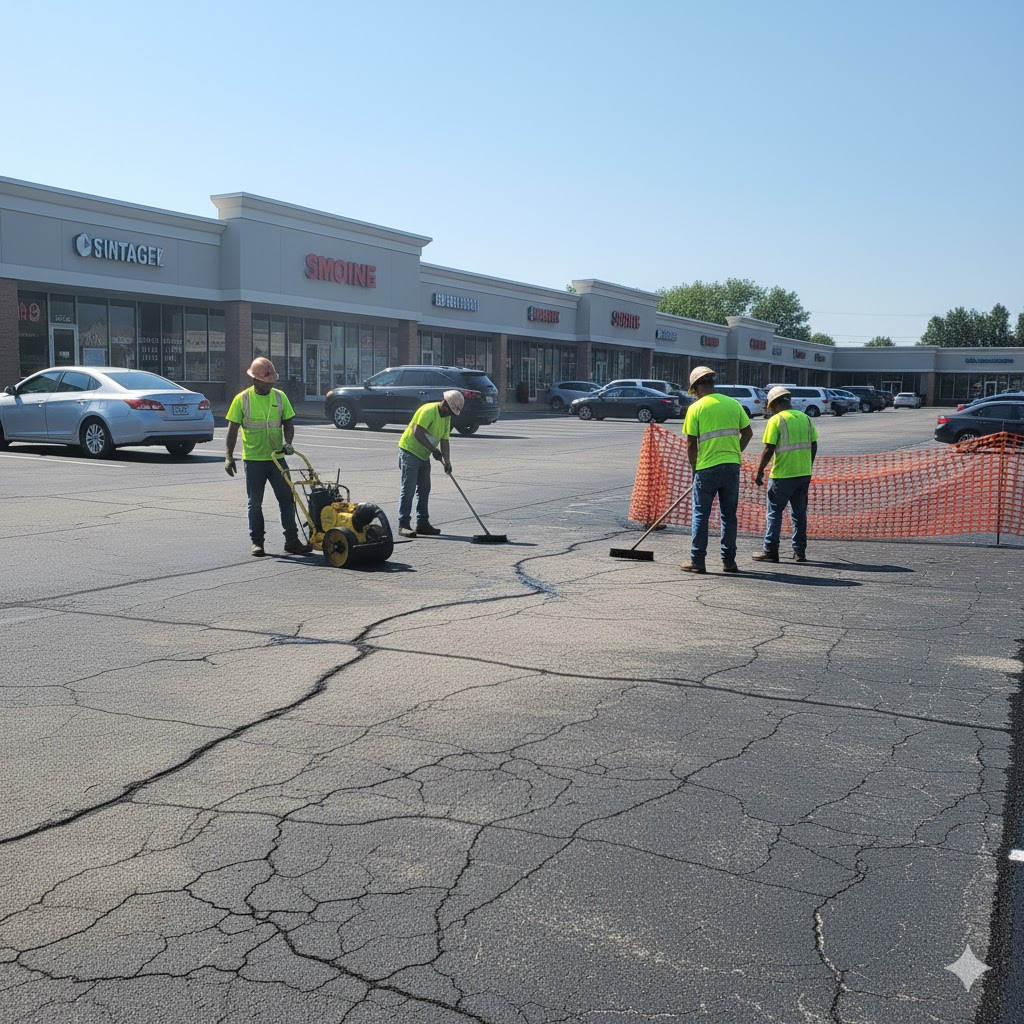
Maintenance planning is much more cost-effective than emergency repair work, which is done on an annual basis. Regular maintenance enables property proprietors to manage budgets, prevent unexpected costs, and provide continuous access to their customers and tenants. Proactive investment is always associated with better financial results than fixing at the last moment.
Repair, Resurfacing or Replacement?
The selection of the appropriate asphalt solution is determined by the condition of the pavement, its age, and its strength.
| Decision Factor | Asphalt Repair | Asphalt Resurfacing | Full Asphalt Replacement |
|---|---|---|---|
| Best Used When | Damage is minor and limited to small cracks, potholes, or isolated areas. | Surface shows widespread wear, but the base and foundation are still structurally sound. | Pavement has severe cracking, base failure, drainage issues, or long-term neglect. |
| Type of Damage Addressed | Surface-level defects only. | Surface deterioration across large areas. | Structural failure affecting both surface and base layers. |
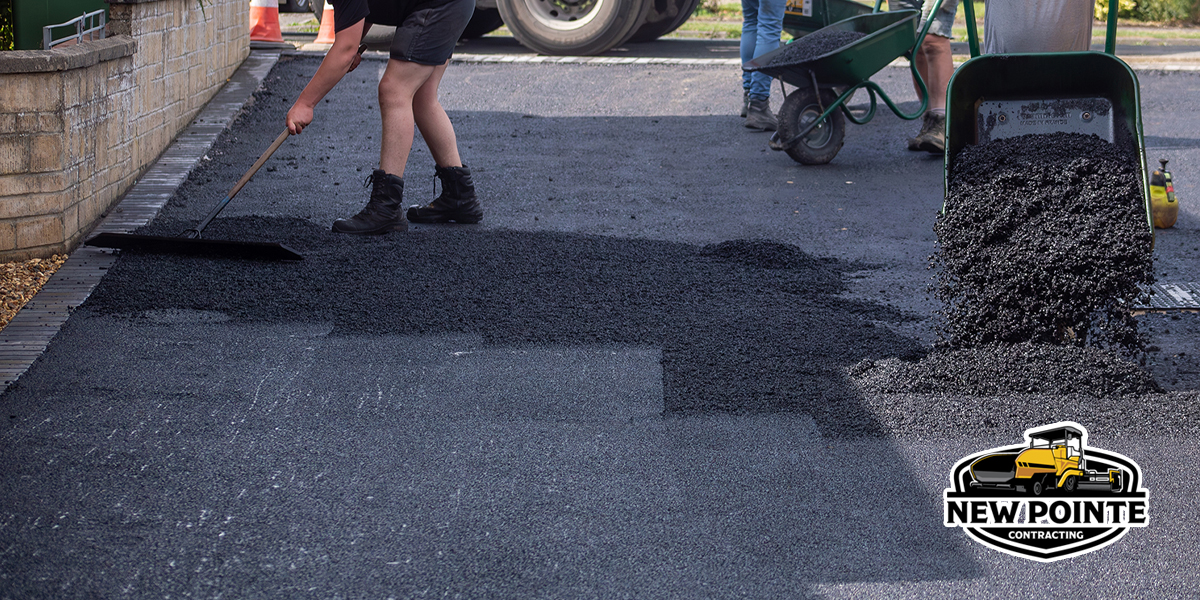
| Scope of Work | Crack sealing, patching, localized fixes. | Milling or overlaying a new asphalt layer over existing pavement. | Complete removal and reconstruction of asphalt and base. |
| Cost Range | Lowest upfront cost. | Moderate cost, significantly less than replacement. | Highest upfront investment. |
| Disruption to Operations | Minimal downtime. | Moderate downtime, usually scheduled. | Significant downtime due to extensive construction. |
| Expected Lifespan Extension | Short-term improvement. | Medium-term lifespan extension. | Full lifespan reset (15–25+ years with maintenance). |
| Long-Term Value | Temporary solution. | Cost-effective long-term improvement. | Best option when repairs and resurfacing no longer work. |
| Risk of Repeat Repairs | High if underlying issues exist. | Moderate if base remains stable. | Low when properly installed and maintained. |
| Ideal For | Early-stage deterioration. | Aging asphalt with a strong foundation. | Severely damaged or failing pavement. |
Common Asphalt Maintenance Errors to Prevent
This means delayed crack repair enables moisture to enter the structure, which can hasten the structural damage. Premature sealcoating becomes trapped, and late sealcoating exposes asphalt to the elements of oxidation and brittle nature. Both time errors decrease the efficacy of protective treatment.
When selecting the lowest-priced contractor, the quality of materials, thickness, and compaction is usually poor. The lack of attention to base preparation and drainage problems also destabilizes pavements, leading to failures that cannot be addressed by surface treatments.
How Professional Asphalt Maintenance Extends Pavement Life
The industry standards are observed by professionals in terms of inspection, preparation, selection, and application of material. They apply quality materials, the proper asphalt thickness, and proper compaction methods to ensure structural integrity with time.
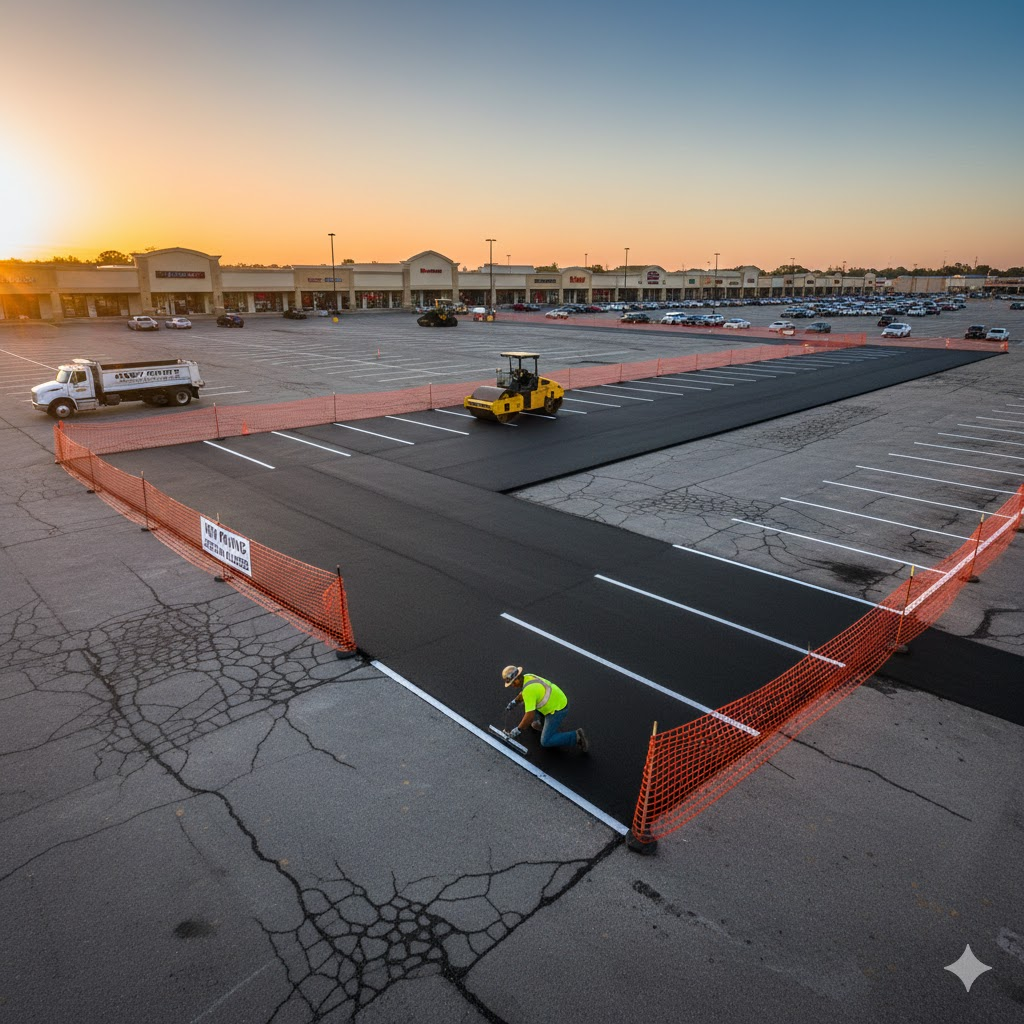
The payoff in long-term investment is the long life cycle of the pavement, a lesser number of major repairs, minimized liability, and enhancement in property value. Regular professional maintenance will also alter asphalt, which is a costly expense to a long-term investment.
Conclusion
The first phase in ensuring your asphalt investment is preserved is by having the knowledge that pavement is not the install-once kind of installation. It is a long-term investment that should be taken care of. Active asphalt maintenance can be used to greatly increase the longevity of the pavement not only by correcting minor problems before they develop into structural failures but also because of the inherent benefit of addressing smaller issues before they become large; your surface is able to outperform the expected service life considerably.
Periodic maintenance also provides quantifiable savings in cost as well as enhancing safety. Covering cracks, ensuring good drainage, and maintaining a clean surface minimize the risks of a trip and damages to vehicles as well as liability and avoid costly emergency repairs or early replacement. To the point, maintained asphalt keeps your money safe, as well as the individuals who traverse your premises on a daily basis.
Call New Pointe Contracting at 404-414-7192 and arrange the professional asphalt inspection and order a thorough maintenance quote. You can also schedule a meeting with an expert to get an affordable maintenance plan based on the needs of your property.