- November 18, 2026
This guide explains how often commercial properties in North Georgia should repaint their parking lot markings and why condition matters as much as the calendar. It also covers schedules by property type, wear factors, warning signs, legal duties and cost drivers.
Introduction
Faded lines confuse drivers and weaken the first impression your business makes on every customer who arrives. So how often should you restripe, and what signs tell you the paint cannot wait any longer? Most commercial parking lots should be restriped every 12 to 24 months, and busy sites often need paint every year.
This guide gives you a clear schedule for North Georgia properties along with the signs that call for earlier work. It also explains the legal rules that apply to accessible spaces and fire lanes on private commercial property.
How Often Should You Restripe a Commercial Lot in North Georgia?
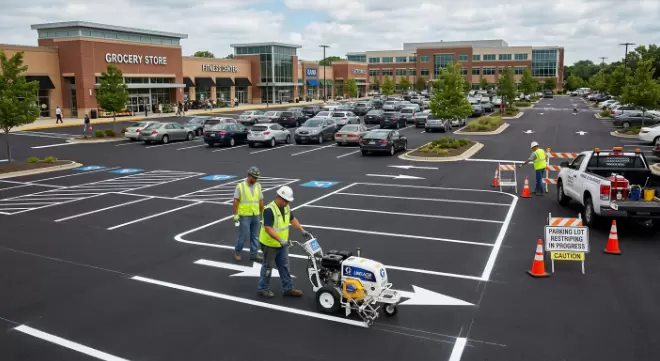
No Georgia or federal law sets a fixed repaint date for private lots, so owners must plan using local conditions. Markings must stay readable and accessible features must stay in working order, so condition should trigger the work as much as time does.
You should restripe your parking lot every 12 to 24 months for most sites, though traffic level changes that range.
Recommended Schedule by Property Type
Use these planning ranges as a starting point for Metro Atlanta and North Georgia properties of every size.
| Property type | Suggested interval |
|---|---|
| Grocery, retail, restaurant, fuel and busy medical | Every 12 to 18 months |
| Office, apartment, medical and mixed use | Every 18 to 24 months |
| Low traffic overflow, storage and industrial yards | Every 24 to 36 months if lines stay clear |
When Restriping Cannot Wait
Sealcoat covers old markings, so every sealcoat job needs new paint once the surface has cured. Patching, milling, overlays and layout changes also call for fresh lines in the affected area or across the whole lot.
What Affects the Life of Parking Lot Paint
Several site conditions decide how fast paint wears down, and North Georgia weather adds extra stress.
Traffic and Vehicle Type
-
Constant turning and tire scrub wear down stall lines, arrows, stop bars and crosswalks much faster at busy sites.
-
Trucks, buses, delivery vehicles and heavy SUVs cause more wear than ordinary passenger cars do.
Sun and Rain
-
Strong summer sun oxidizes and fades paint, and lots with no shade fade the fastest.
-
Heavy rain and standing water speed up wear in drive lanes, especially across open south facing lots.
Surface Condition
Paint will not hold on alligatored or crumbling asphalt, so repair the pavement first and then restripe.
Signs You Need to Restripe Parking Lot Markings Now
Owners who restripe parking lot markings at the first sign of wear avoid complaints and compliance trouble.
Visual Warning Signs
-
Stall lines look faded or patchy, or they are visible only in certain light or at certain times.
-
Drivers straddle lines or park inconsistently because the stalls are no longer clear across the lot.
-
New sealcoat, patches or asphalt repairs have been left unstriped even though the surface has finished curing.
Safety and Access Markings
-
Accessible aisles, symbols and van accessible markings look faded or unreadable, and these need attention first.
-
Arrows, stop bars, one way text and crosswalks are hard to see, especially at night or in the rain.
-
Fire lane curbs and stencils have faded from red to pink or gray, which weakens enforcement and towing.
A good inspection standard is that every marking stays clear to drivers and inspectors in daylight, at night and when wet.
Restriping Parking Lot Meaning and What the Job Covers
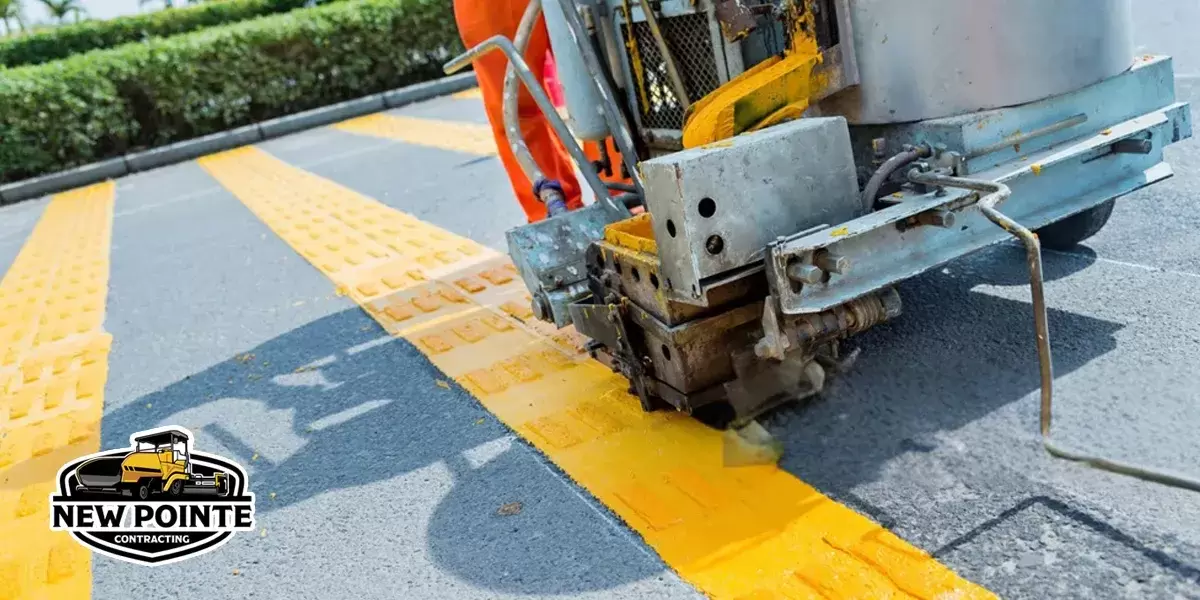
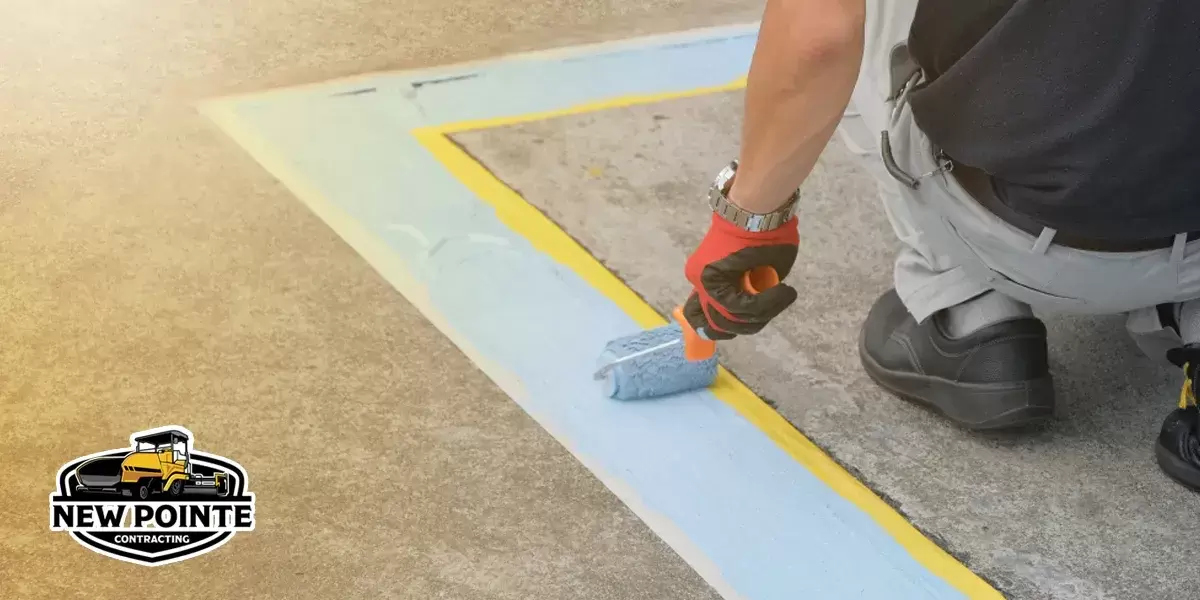
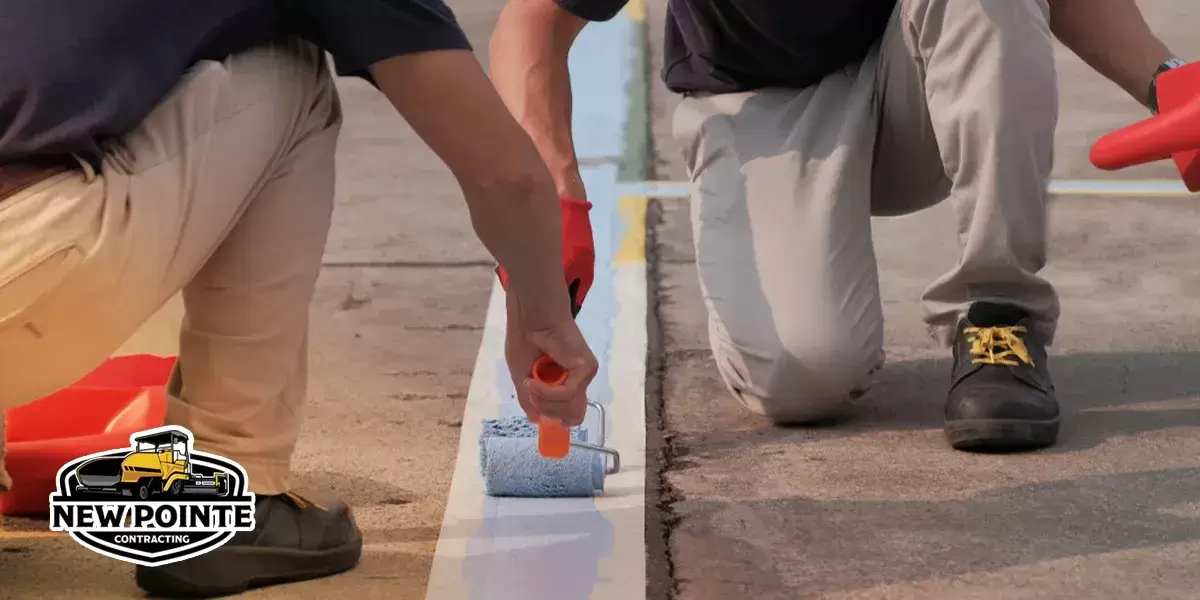
The restriping parking lot meaning is simple, since it covers repainting every line and symbol that guides vehicles and pedestrians.
What a Full Restripe Includes
-
Stall lines and numbered stalls where they apply, plus accessible spaces, access aisles and required pavement symbols.
-
Fire lanes, no parking zones and loading zones should be repainted along with directional arrows and stop bars.
-
Crosswalks, pedestrian routes, curbs, wheel stops and other painted safety features also belong in the scope.
Restripe or Relayout
If the existing layout changes, the job becomes a relayout instead of a simple restripe. A relayout needs measuring first, and pairing it with sealcoating keeps old lines from ghosting through the new surface.
How Often Should You Restripe to Stay Compliant With the Law?
The law does not set a repaint schedule, yet it does require markings to stay clear and usable.
ADA Maintenance Duties
Federal ADA rules for businesses open to the public require accessible features to stay in working condition. A faded access aisle can create compliance risk even when the original layout was correct.
Georgia Accessible Parking Rules
Georgia law requires property owners who must provide accessible parking to designate each required space properly. Failure can bring a $150 fine per space, and the fine may be waived if the owner corrects it within 14 days. After the fifteenth day an extra $5 per space can accrue each day until the markings are corrected.
Fire Lanes and Local Enforcement
Fire lane markings must stay legible for enforcement, and rules differ by city and county across North Georgia. Property managers should confirm marking, signage, curb color and towing sign requirements with the local fire marshal or code enforcement office.
Paint Choices and Cost Factors
Paint Choices
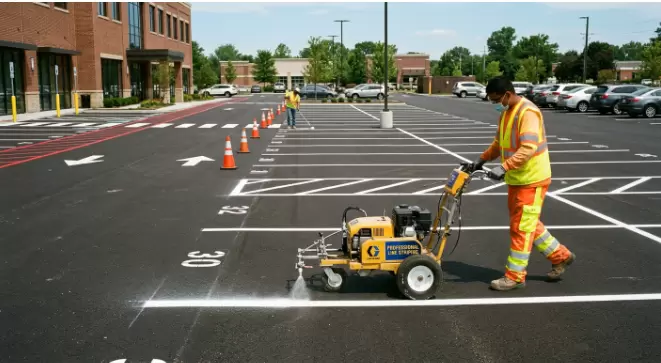
Most North Georgia commercial lots do well with standard paint for stall lines and thermoplastic for high wear marks.
| Paint type | Pros | Cons |
|---|---|---|
| Waterborne acrylic | Lower cost and dries fast in warm weather | Wears out sooner in busy areas |
| Thermoplastic | Much more durable for crosswalks, arrows and stop bars | Costs more upfront |
What Changes the Price
Costs vary by lot size, layout complexity, paint type, surface preparation, travel distance and whether sealcoating is bundled. Ask for itemized quotes that list the details below so you can compare each bid fairly.
-
The quote should show linear feet of striping plus the count of stalls and accessible spaces.
-
It should also list arrows, stop bars, crosswalks, stencils and whether thermoplastic is included in the price.
Additional Tips for a Simple Maintenance Calendar
-
Inspect your lot once a year, ideally in late winter or early spring, so repairs can finish before painting.
-
Schedule the work from spring through early fall, when warm dry weather helps paint cure properly.
-
Touch up accessible spaces, fire lanes and crosswalks as soon as they become unclear instead of waiting.
Final Words
Whenever you ask how often should you restripe, remember that most North Georgia lots need paint every 12 to 24 months. Restripe right after every sealcoat and whenever markings turn faint, because condition matters more than the calendar.
New Pointe Contracting is an asphalt paving and concrete contractor serving homes and businesses across North Georgia with 40 years of experience. We have completed more than 3,000 projects in communities including Marietta, Alpharetta, Roswell, Woodstock and Acworth. Call us at 404-414-7192 for parking lot stripping and maintenance inquiries and paving project estimates, and we will guide you.