- January 06, 2026
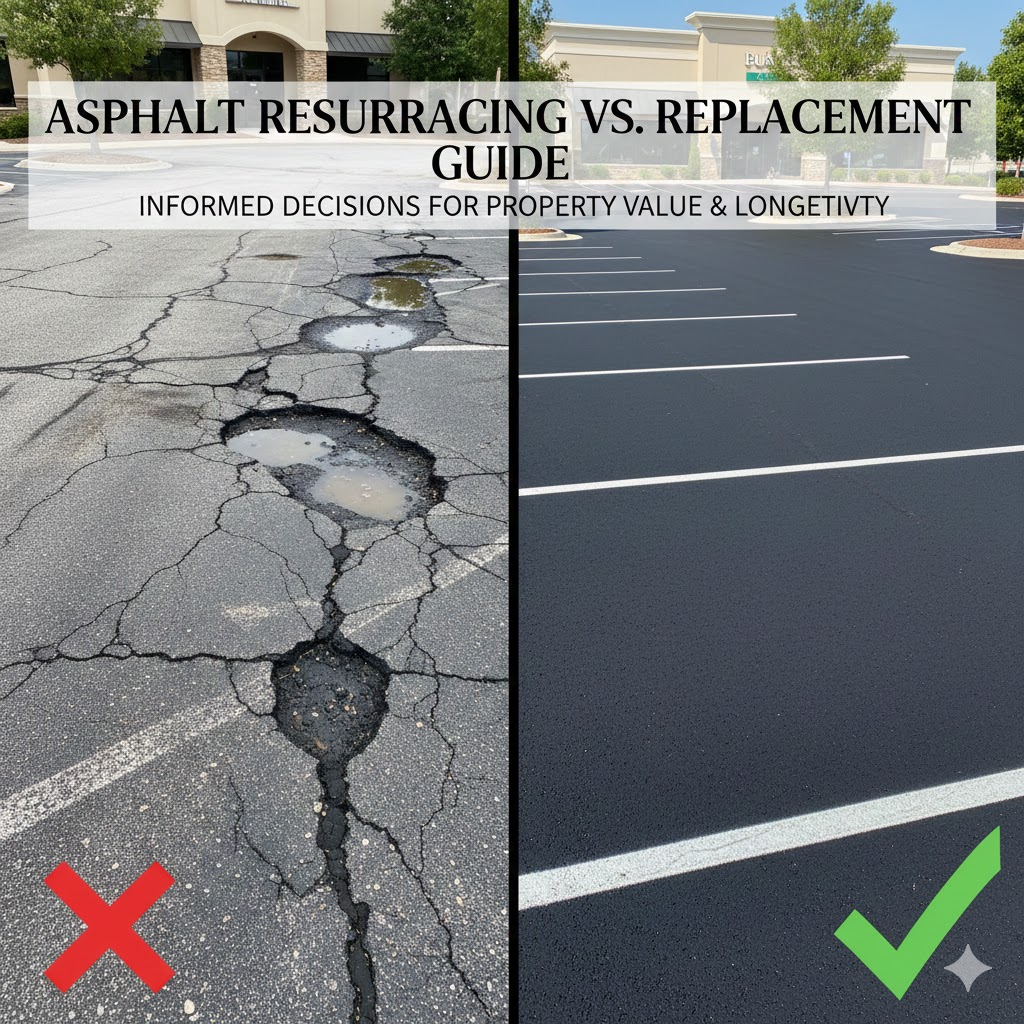
The decision between asphalt resurfacing and complete replacement is not only a matter of budget; it has a direct impact on pavement life and lifespan, as well as overall property value. As soon as cracks, potholes, or irregularities begin to appear, it is one thing to know what the correct approach is and not to over-expend or under-maintain your pavement. In this guide, we have dissected the main differences, signs, and costs of such, as well as long- and short-term effects, in order to make an informed decision about the life expectancy of asphalt pavement.
What Damages Asphalt the Most?
Asphalt is weak in nature, and as time goes by, it deteriorates, but under some conditions, it deteriorates faster. These comprehensions enable one to determine the most appropriate course of action between resurfacing and replacement.
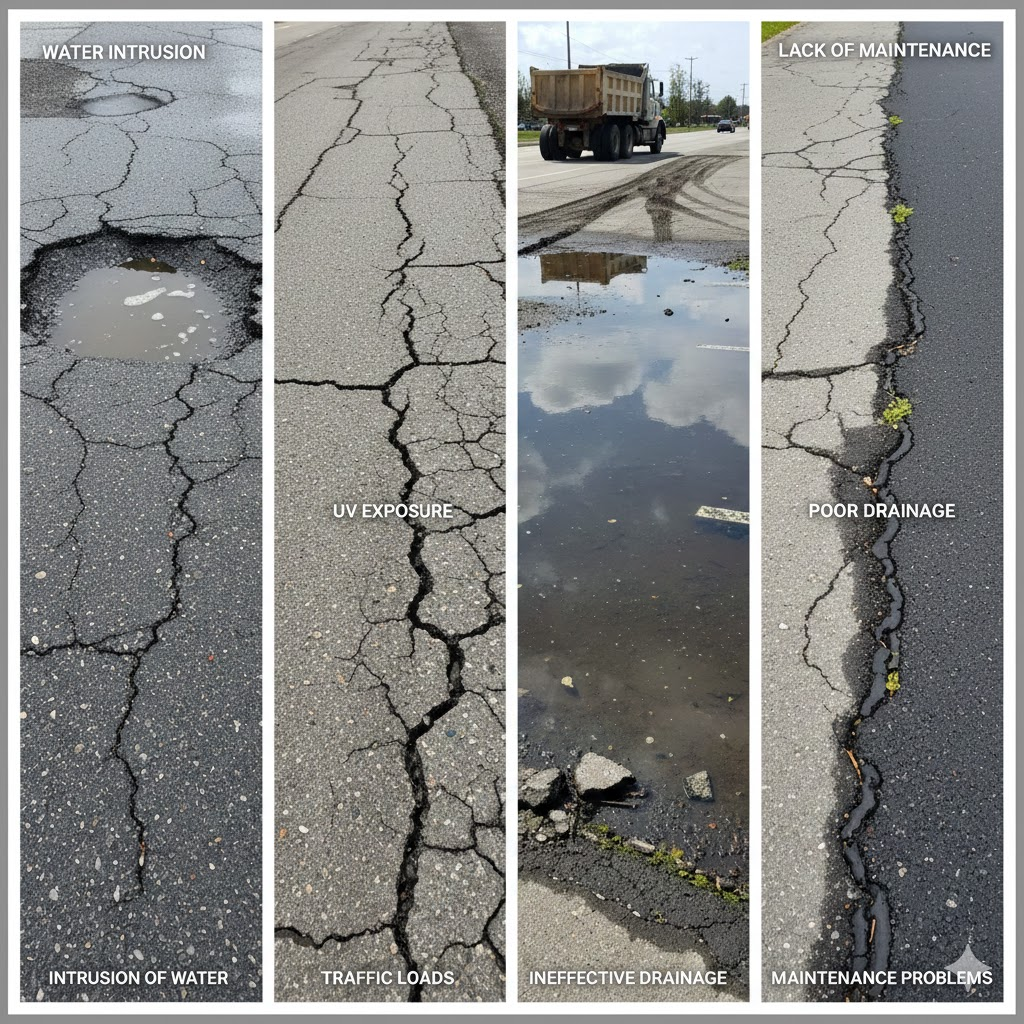
The common causes of asphalt damage are
-
Intrusion of water: Gives rise to potholes, base erosion, and freeze-thaw cracking.
-
UV exposure: Dries and hardens the asphalt binder, making it brittle.
-
Traffic loads: Rutting, depressions, and fatigue cracks are increased.
-
Ineffective drainage: Forms ponding water, which is weak in asphalt covers.
-
Maintenance problems: Sealcoating and crack repairs are not done, resulting in premature aging.
What Is Asphalt Resurfacing?
Resurfacing is the installation of a new layer of asphalt (1.52 inches) on the old pavement. It replenishes the looks and provides structural reinforcement, not by taking everything away.
When Resurfacing Works Best:
-
Less than 25%-30 percent of the pavement is decimated.
-
Cracks are under ¼ inch wide.
-
The foundation layer is firm and sound.
-
Worn but not much broken.
Benefits of Resurfacing
-
Cost-effective or replacement.
-
Increases the duration of life of pavement by 8-15 years.
-
Refinishes and creates a sleek and attractive curb appeal.
-
Reduced downtime and completion in a shorter period.
What Is Asphalt Replacement?
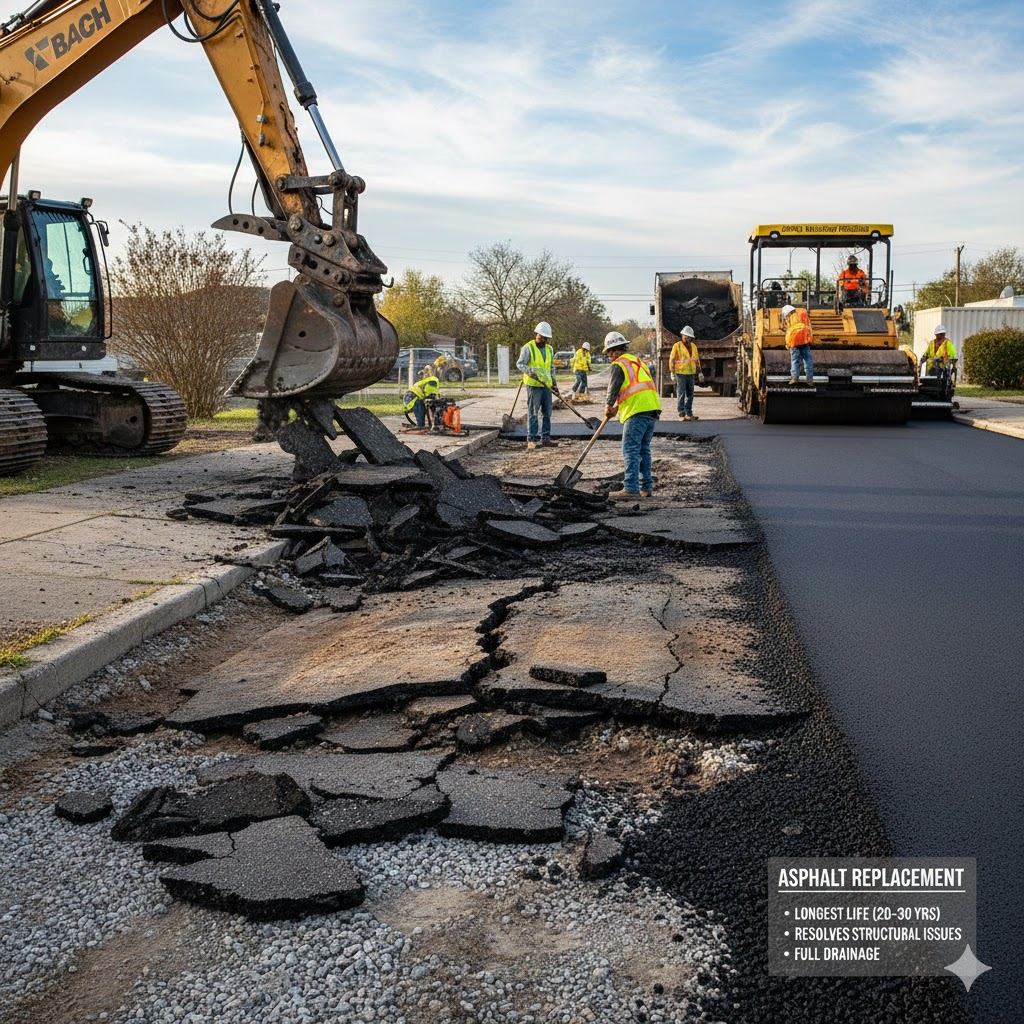
Replacement is one in which the whole pavement is torn to the base and constructed again. This is advised in the case of the loss of structural integrity.
Signs You Need Replacement
-
The pavement should be more than 30 percent repaired.
-
The base layer is loose, effusive, or wet.
-
Pavement age is 15–25+ years.
-
Cracks more than 1/3rd deep and wide.
-
There are several resurfacing layers already.
Benefits of Replacement
-
Has the longest life (20 to 30 years).
-
Resolves structural problems on a permanent basis.
-
Full drainage can be corrected.
-
Carpers carry more loads and trade.
Resurfacing vs. Replacement: Which Is Right for You?
Choosing between the two depends on pavement condition, damage depth, and long-term goals. The table below simplifies the decision:
| Category | Resurfacing | Replacement |
|---|---|---|
| Damage Level | Ideal for minor to moderate surface damage. | Best for severe cracking, potholes, or base failure. |
| Crack Size | Up to ¼ inch wide & shallow. | Wider than ¼ inch & several inches deep. |
| Percentage of Area Damaged | Less than 30%. | More than 30%. |
| Base Condition | Stable and strong. | Weak, eroded, or water-damaged. |
| Pavement Age | Under 20 years. | Over 20–25 years. |
| Project Cost | Lower upfront cost. | Higher upfront cost. |
| Lifespan Added | Adds 8–15 years. | Delivers 20–30 years of durability. |
| Appearance | Restores look, may show older patchwork over time. | Completely new, uniform surface. |
| Traffic Tolerance | Good for moderate-traffic areas. | Needed for high-traffic or heavy-load areas. |
| Best Choice For | Home driveways, lightly used parking lots. | Commercial properties, industrial lots, severely damaged driveways. |
Major Factors That Help to Choose
-
Damage Depth
Cracks at the surface level - Resurface.
Cracks of a deep nature on the base→ Replace.
-
Budget
Limited budget? The resurfacing is cheaper.
Want a long-term investment? It is more profitable to replace.
-
Longevity Goals
Requirement for short-term enhancement: resurfacing.
Want 20-30 years of stability Replacement
-
Traffic Load
Residential light use → Resurface.
Commercial traffic load and heavy traffic load or meet replace.
How Does Resurfacing Save Your Money?
Smart investment is resurfacing in case the foundation is stable. You do not incur full reconstruction and, at the same time, reinforce your pavement.
Resurfacing Saves Money When:
-
You maintain cracks early.
-
Drainage is already good.
-
Damage is only cosmetic
-
You do not want to spend much to upgrade the look.
When Replacement Is the Only Option
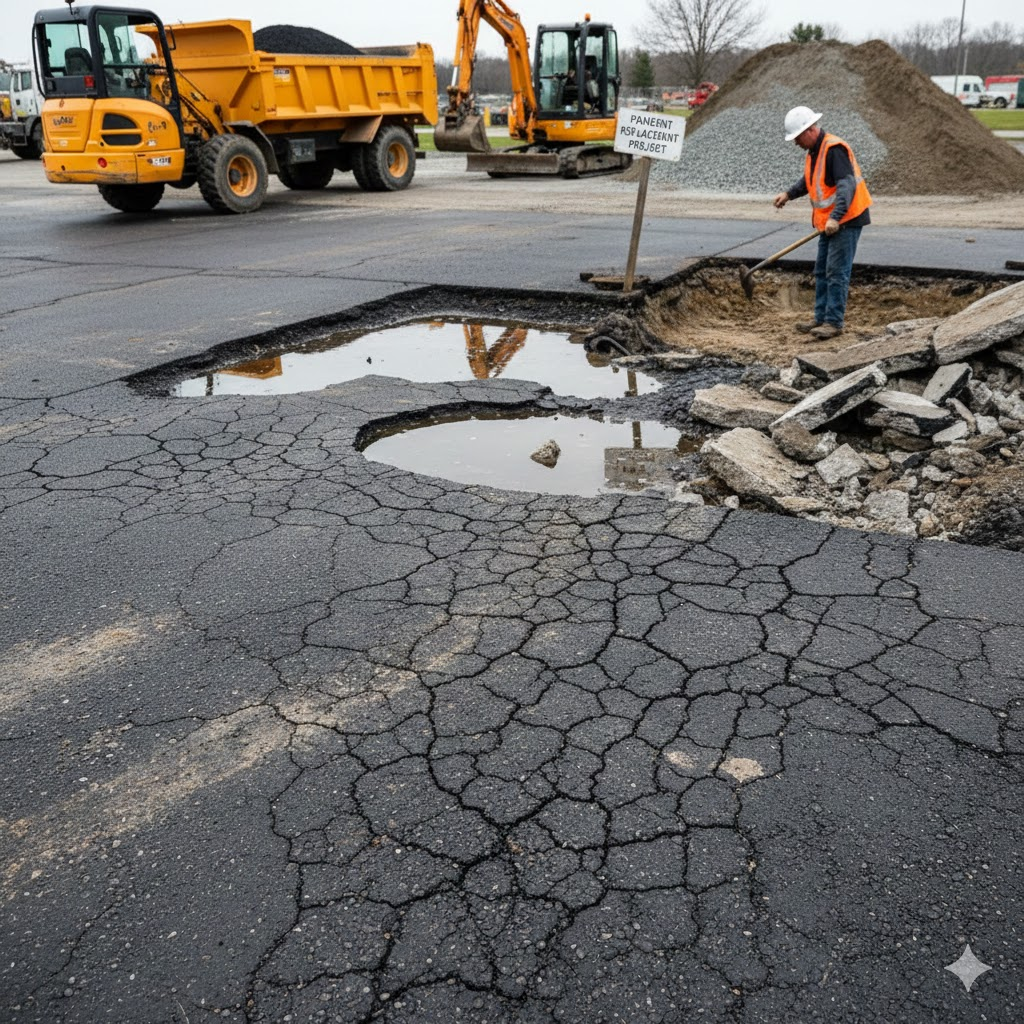
In case your pavement is too bad, you will only postpone the issue by having it resurfaced. Underlying problems will reemerge soon.
Replacement Is Necessary When:
-
Even after repairs, cracks continue to reoccur.
-
Water pooling is constant.
-
Alligator cracking is spreading over the tarmac.
-
The foundation is lost or collapsed.
Making the Final Decision
The following questions may help you make a choice:
-
Are there deep cracks?
-
Is there more than one place where water stagnates?
-
Is the pavement less than 20 years old?
-
Is it over 30 percent of the surface that requires repair?
-
Has it already been resurfaced several times?
In case the majority of the answers are “yes,” it is a yes to replace. If the majority of them are “no,” it is still possible to resurface.
Conclusion
Whether it is a driveway, a commercial parking lot, or an industrial pavement, timely choices would save additional losses and save on repair expenses. Resurfacing prolongs the lifespan of pavement in case of light damage. Replacement provides lasting stability in case of failures in the structure. The correct method will be safe and long-lasting.
Unconvinced about which one suits best: resurfacing or replacement of your pavement? Call New Pointe Contracting at 404-414-7192 to have a free site analysis. Our professionals will survey your pavement, clarify your choices, and suggest the one that is the most cost-effective.
.webp)