- February 16, 2026
Your asphalt driveway or parking space in North Georgia does not break down overnight today, but it gets damaged as a result of the weather, traffic, and time. Scattered tiny cracks or even fading spots might not mean much; however, they show the signals that something is wrong with your pavement. And the sooner you take care of those early problems, the less you will end up paying in the long run.
How Asphalt Fails
The majority of the North Georgians are shocked to hear that asphalt does not simply wear out of its own accord. It disintegrates due to the climate, as weather has a significant effect on asphalt.
-
Freeze–Thaw Cycles
The winters in North Georgia are severe and the temperatures tend to rise and fall above and below the freezing point. Even the smallest crack in November may turn to a pothole in February.
-
UV Oxidation
The heat of our sunny summers burns the asphalt, draining the oils out of it, making the pavement grey and dry and brittle. As soon as asphalt becomes nonflexible, it starts cracking at a faster rate. The top cause of North Georgia driveways getting old more than they should is UV rays.
-
Heavy Vehicles
When you place work trucks, trailers, RVs, or equipment on your driveway, the weight has the potential to squash the asphalt over time and destroy the base.
-
Lack of Maintenance
It is not optional to sealcoat, fill in cracks, or install proper drainage. In cases where maintenance is not undertaken, the pavement remains open to water, sunlight, oils, and weather, causing premature cracking and potholes.
Signs Your Asphalt Needs Repair
Sign #1: Cracks That Multiply
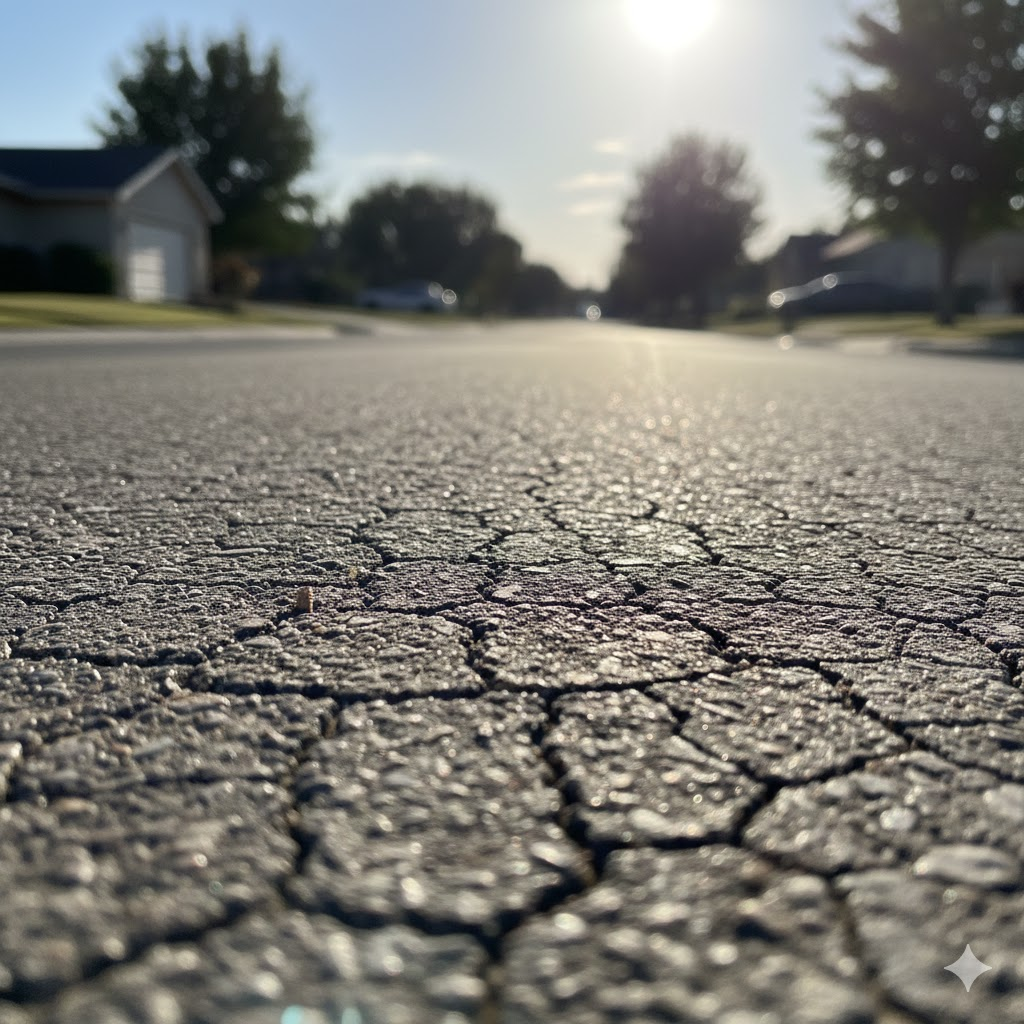
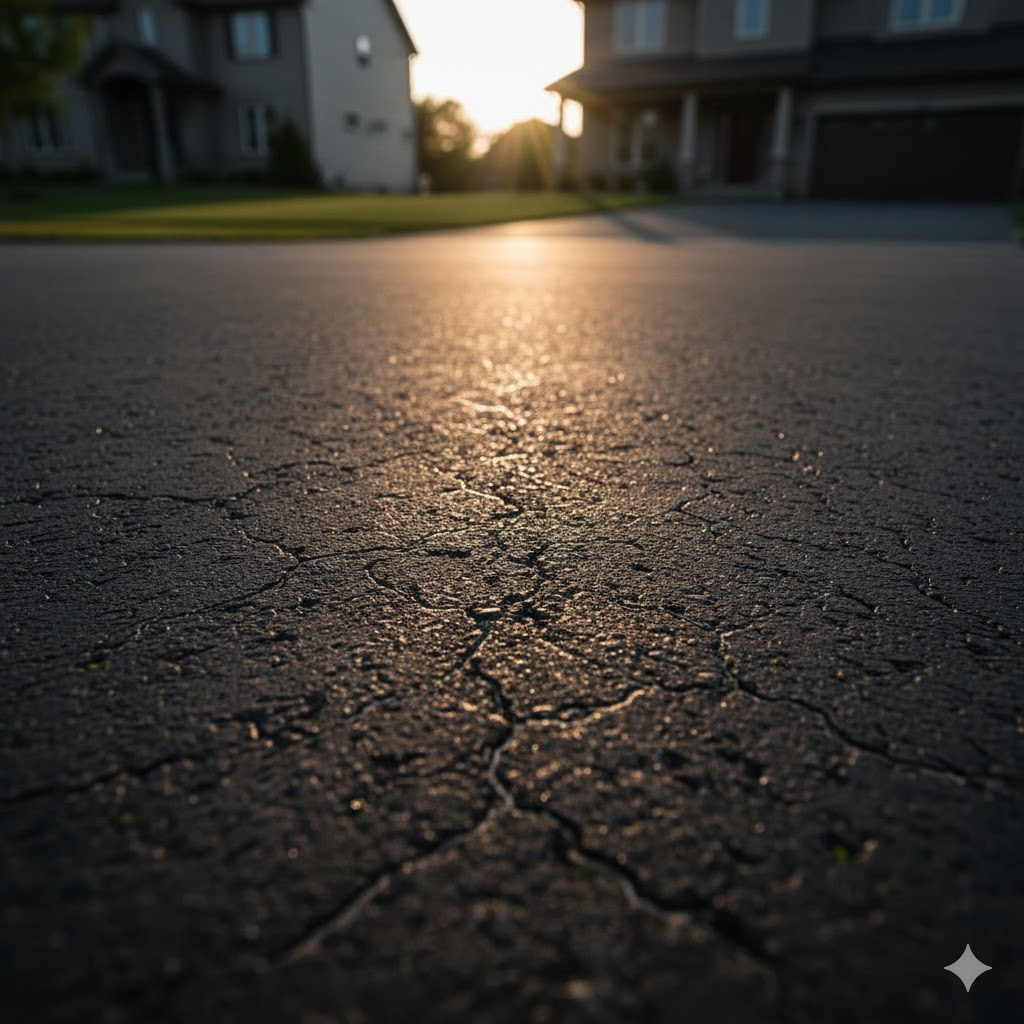
The first thing that you would see when the asphalt starts to deteriorate is the appearance of cracks across your driveway or your parking lot. Cracks may develop rapidly in the hot summer mix in North Georgia that is interspersed with freezing winters. You may see:
-
Linear cracks
-
Edge cracks
Sign #2: Potholes Forming
The potholes emerge when water penetrates under the asphalt and compromises the base layer, a process that is exacerbated by rain and freeze-thaw cycles in North Georgia. Once the foundation becomes soft, the traffic drives the asphalt into the ground until it makes a hole. Potholes are not only aesthetically unappealing, but they are also dangerous to cars, tires, and even individual people who walk over the pavement.
Sign #3: Standing Water
When the rainwater does not run off your driveway, it means that the asphalt is either sinking, uneven, or not properly graded. The problem of drainage tends to occur due to:
-
Poor slope
-
Settling or sinking of asphalt
-
Inadequate drains.
Sign #4: Dried, Dull, or Brittle Asphalt
The sun eventually dries up the asphalt and draws the oils off the surface. This makes that familiar so watery and so gray that everybody in all of North Georgia sees it after a season or two. Asphalt becomes brittle, and it loses its flexibility and becomes easier to crack.
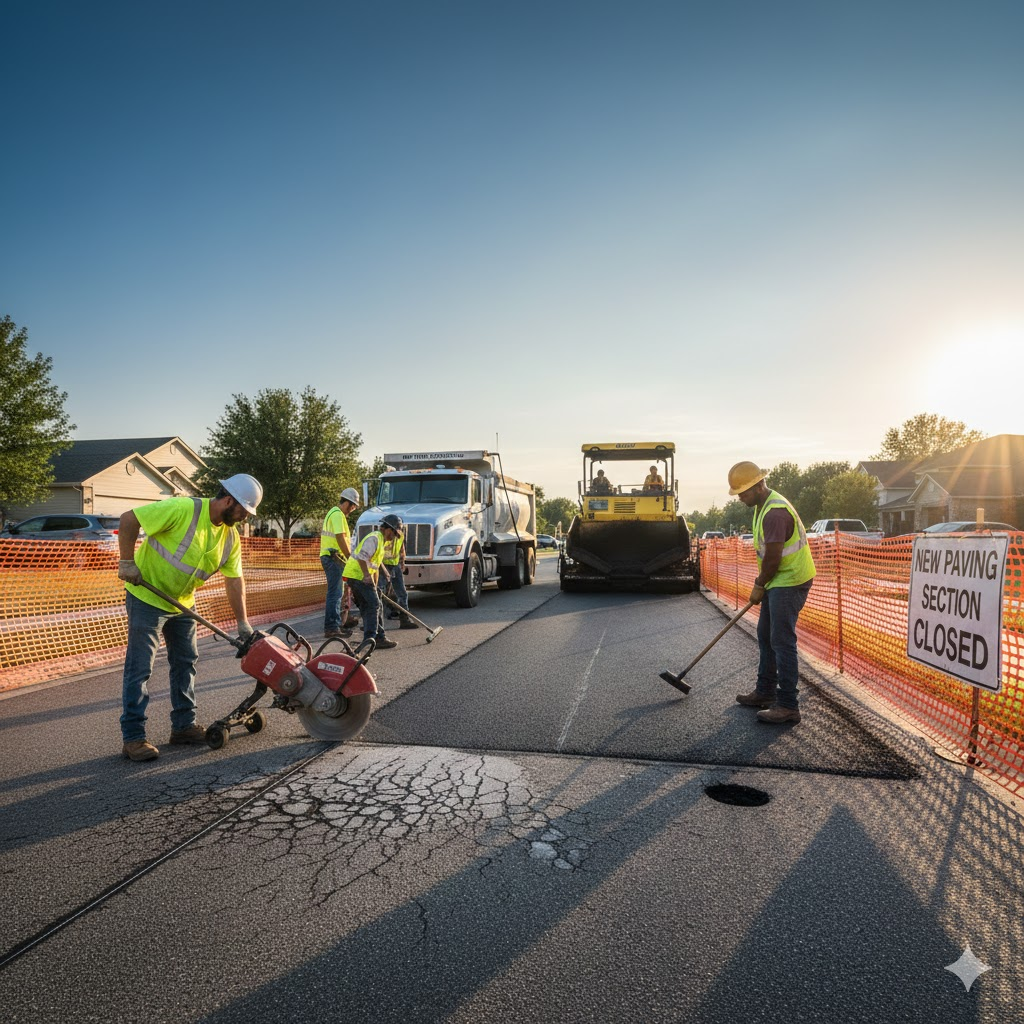
In a case when the pavement is only cracked but not rough, the pavement is often recovered by sealcoating, which provides protection and restores its color. However, when the asphalt is already fragile, splitting, or cracked, the wearing out might be telling you that there is more damage within it that requires repair and not sealant.
Sign #5: Surface Erosion
Raveling is a process where the top layer of the asphalt begins to fracture and the gravel begins to appear on the surface. This occurs when the cement (the glue that binds asphalt together) becomes weaker due to age, weather, or even absence of maintenance. Raveling lessens the traction and may render the surface slick or bumpy.
Sign #6: Buckling or Warped Asphalt Surface
When sections of your driveway appear sunken, swollen, or uneven, this normally indicates that there is an issue under the asphalt. Some of the reasons that are common in North Georgia are unstable soil, poor compaction, or water trapped under the ground.
Sign #7: Aged Driveway
North Georgia has most of its asphalt surviving for 15 years under normal care. When your pavement is maturing and has undergone several repairs of cracks and potholes, you might find it more economical to either resurface or replace it than to patch it over and over again.
A full replacement gives you:
-
A fresh, strong base
-
A smooth, durable surface
-
Longer lifespan
-
Better curb appeal
For a practical overview of long-term care, see our guide on parking lot asphalt maintenance.
Should You Repair or Replace?
There are occasions when one cannot tell whether to go with a minor repair or to go with a complete replacement as the more prudent choice in the long run. With the help of this comparison table, you can easily find the optimal solution depending on the state of the pavement and the degree of its damage.
|
Factor |
Choose Repair When… |
Choose Replacement When… |
|
Crack Severity |
Cracks are minor, shallow, and less than ¼ inch wide. |
Cracks are deep, widespread, alligator-like, or expanding rapidly. |
|
Pothole Condition |
Only one or a few small, isolated potholes affect limited areas. |
Multiple or large potholes indicate structural failure underneath. |
|
Surface Wear & Fading |
Mild fading or surface oxidation is visible, but the asphalt is still solid. |
Asphalt is brittle, heavily oxidized, or crumbling across large sections. |
|
Foundation Stability |
The subbase is intact, and damage is only on the top surface layer. |
Foundation is weak, shifting, or sinking—causing uneven pavement. |
|
Drainage Performance |
Water pools slightly but drains with minor corrections. |
Chronic drainage issues, standing water, or slope failure. |
|
Age of Pavement |
Pavement is still relatively young (under 10–12 years) and is maintained regularly. |
Pavement has reached the end of its lifespan (15–25+ years). |
|
Budget Considerations |
You need a quick, affordable fix that extends short-term life. |
Long-term investment makes more sense than repeated repairs. |
|
Longevity Expectation |
You want to add a few more years before major restoration. |
You want a fresh, long-lasting surface with structural durability. |
The Benefits of Routine Maintenance
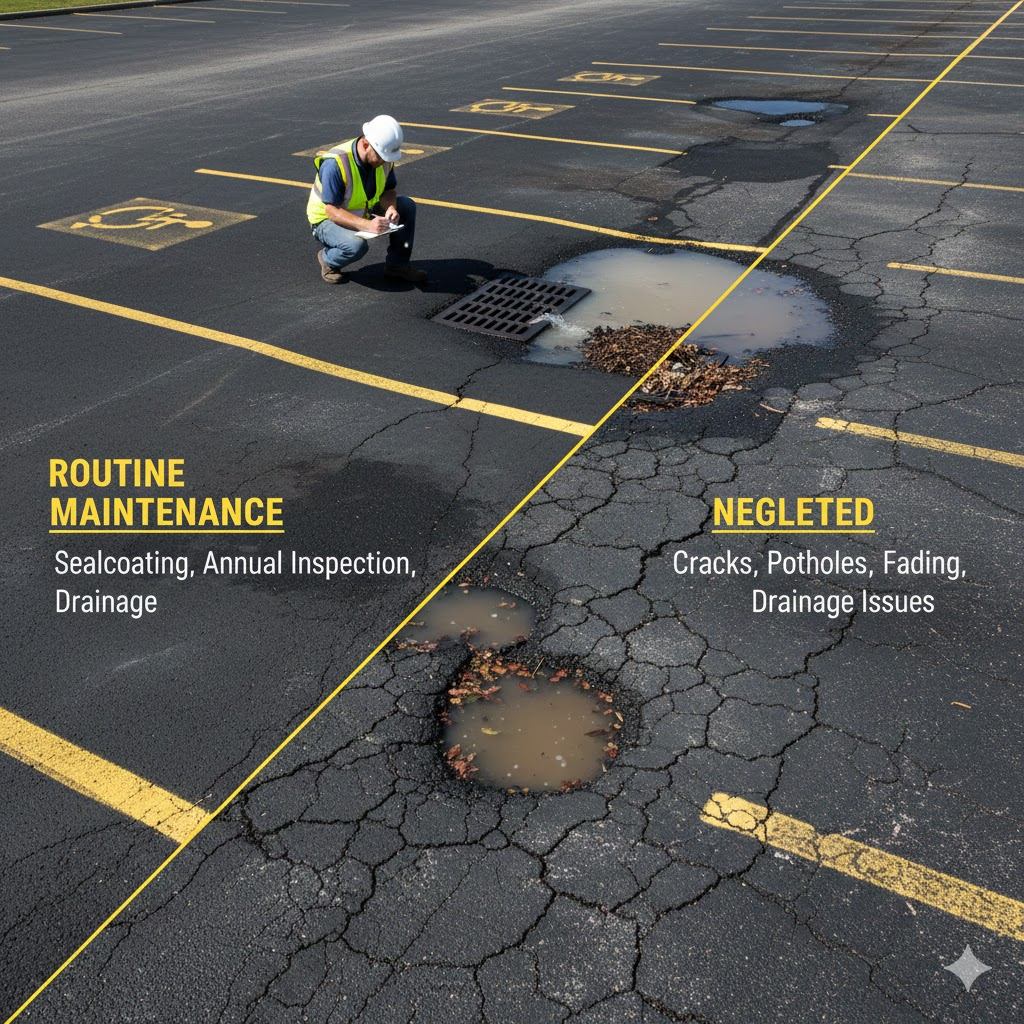
The easiest method of avoiding the worsening of cracks, potholes, fading, and drainage problems is regular maintenance of asphalt. Sealcoating is appropriate every 2-3 years and keeps the surface out of UV rays and water. Professional inspection annually helps to identify minor issues that are easy to fix without expensive repairs. Drainage maintenance, such as fixing standing water or clogging, will help to keep the base healthy and prolong the life of your driveway or parking lot.
Conclusion
The decision that must be made between asphalt repair and replacement rests upon knowing how serious the damage is and the duration you want to maintain the pavement, and in addition, the decision will be determined by how strong the underlying structure is. The appropriate maintenance plan will allow you to use the maximum pavement lifespan and save on high costs in the future.
Are you now willing to fix your asphalt? Call at 404-414-7192 or visit New Pointe Contracting for a quick free estimate. You will get convenient and low-priced asphalt repair and replacement of any pavement. Get a free quote and live longer with your pavement!
.webp)