- October 01, 2026
Choosing the right asphalt thickness is one of the most important decisions in a driveway project, yet it is often overlooked. Many homeowners focus on the surface and the price. What sits under the surface decides how long the driveway lasts.
Why Asphalt Thickness Is Important
Thickness is the foundation of your driveway’s performance. A well designed driveway spreads weight evenly, resists cracking and keeps water out of the base. That is why thickness can mean the difference between a driveway that lasts five years and one that lasts twenty.
What Thickness Controls
-
Crack timing: Thin asphalt flexes under vehicle loads and cracks early.
-
Oil stain penetration: Shallow surfaces absorb oil more easily.
-
Resealing frequency: Thin asphalt wears and dries out faster.
-
Replacement timing: Thicker pavement lasts much longer.
Small cracks in thin asphalt soon become structural problems. Water reaches the base and creates soft spots, which lead to potholes and sinking areas. That is why owners face constant repairs, as covered in How to Patch Asphalt Driveway Damage. Dense asphalt slows all of this down..
Normal Residential Asphalt Thickness
A driveway has two key layers. These are the compacted stone base and the asphalt surface on top. Together they decide how well the driveway handles weight, weather and wear.
| Area | Base Layer | Asphalt Layer | Total Structure |
|---|---|---|---|
| Light use driveway | 6 inches | 2.5 to 3 inches | 8.5 to 9 inches |
| Typical family home | 6 to 8 inches | 3 inches | 9 to 11 inches |
| Heavy vehicles | 8 inches | 4 inches | 12 inches |
For most homes, 3 inches of compacted asphalt over a 6 to 8 inch stone base is the sweet spot. It balances cost and performance for daily vehicles.
The Base Matters Most
A thicker asphalt layer cannot make up for a weak, wet or poorly compacted base. A common industry rule says 3 inches of asphalt over 8 inches of well compacted, free draining stone will outperform 5 inches of asphalt over 4 inches of soft fill.
A solid base needs the following.
-
Topsoil, roots and debris removed
-
A firm, uniform and compacted subgrade
-
Crushed stone placed and compacted in lifts
-
A shape that lets water drain without ponding
What Happens Below 2.5 Inches
Asphalt thinner than 2.5 inches cannot spread weight well. Stress concentrates in a few spots and the surface fails. Over time this leads to the following.
-
Cracks within the first 1 to 2 years
-
Oil and fluid stains that sink deep
-
Surface breakup and potholes
-
A high chance of repeated patching
If you already see cracking, your driveway may be too thin. Our guide on How to Patch Asphalt Driveway Damage explains the fixes. The right thickness prevents these problems from the start.
How Your Usage Affects Thickness
Traffic and vehicle weight change what your driveway needs. Family cars put far less strain on pavement than delivery vehicles or large recreational vehicles.
Cars and SUVs Only
For sedans, crossovers and SUVs, 3 inches of compacted asphalt over a solid stone base is usually enough. It spreads load evenly and resists cracking and daily wear.
Pickup Trucks, Vans and Work Vehicles
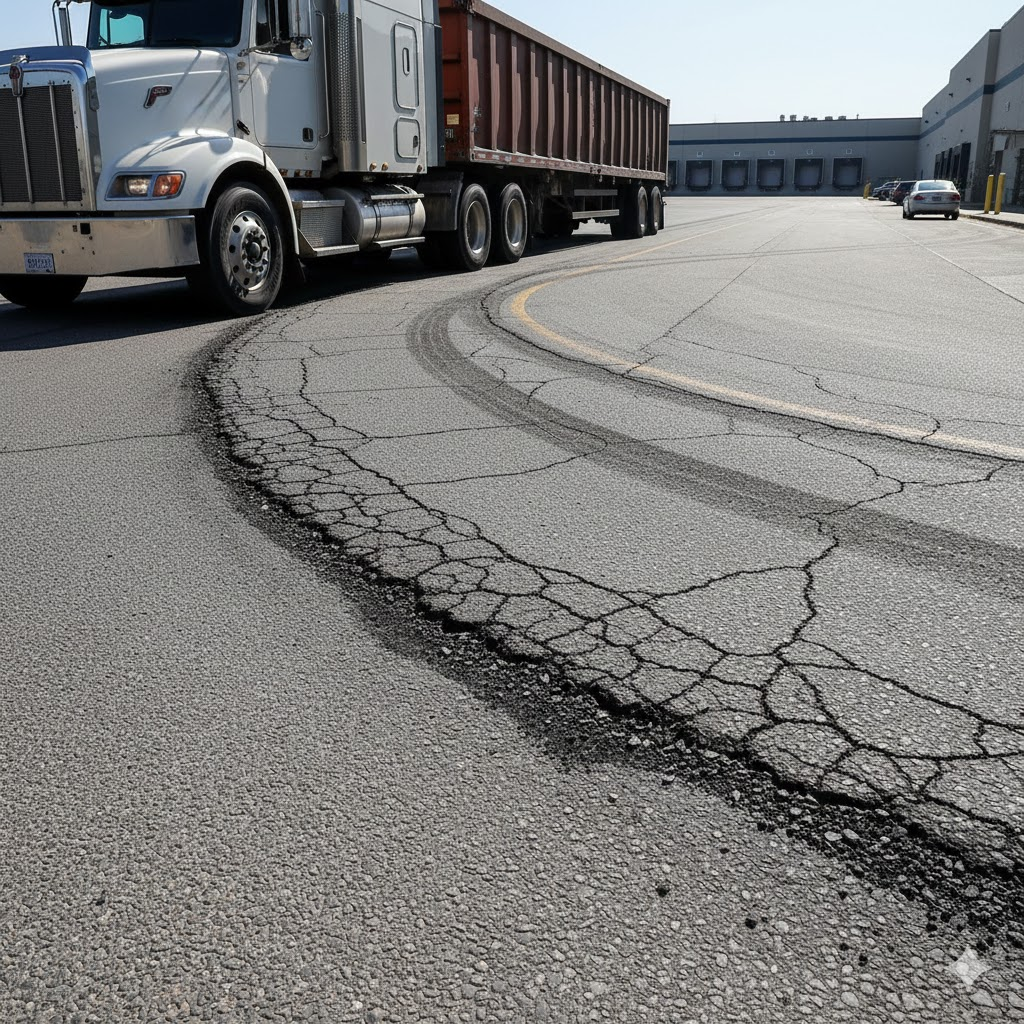
Frequent heavier vehicles need more structure. Plan on 3.5 to 4 inches of asphalt and a 6 to 8 inch base. The extra asphalt limits ruts and surface compression where tires pass often.
RVs, Trailers and Delivery Vehicles
These vehicles place heavy loads on a small contact area. Choose 4 inches of asphalt over a base of 8 inches or more. A 4 inch layer is also worth considering when you meet any of these conditions.
-
The soil is soft, wet or recently filled
-
The driveway is steep or has tight turns
-
A paving engineer recommends a heavier section
Thin pavement under heavy loads cannot spread the weight. The asphalt itself gets squeezed, which causes grooves, dips and cracks that grow over time.
What Wears Down Thin Driveways
Even a well laid driveway loses value early if it does not suit the climate and soil. Thin pavement struggles against weather and ground movement.
Freeze and Thaw Regions
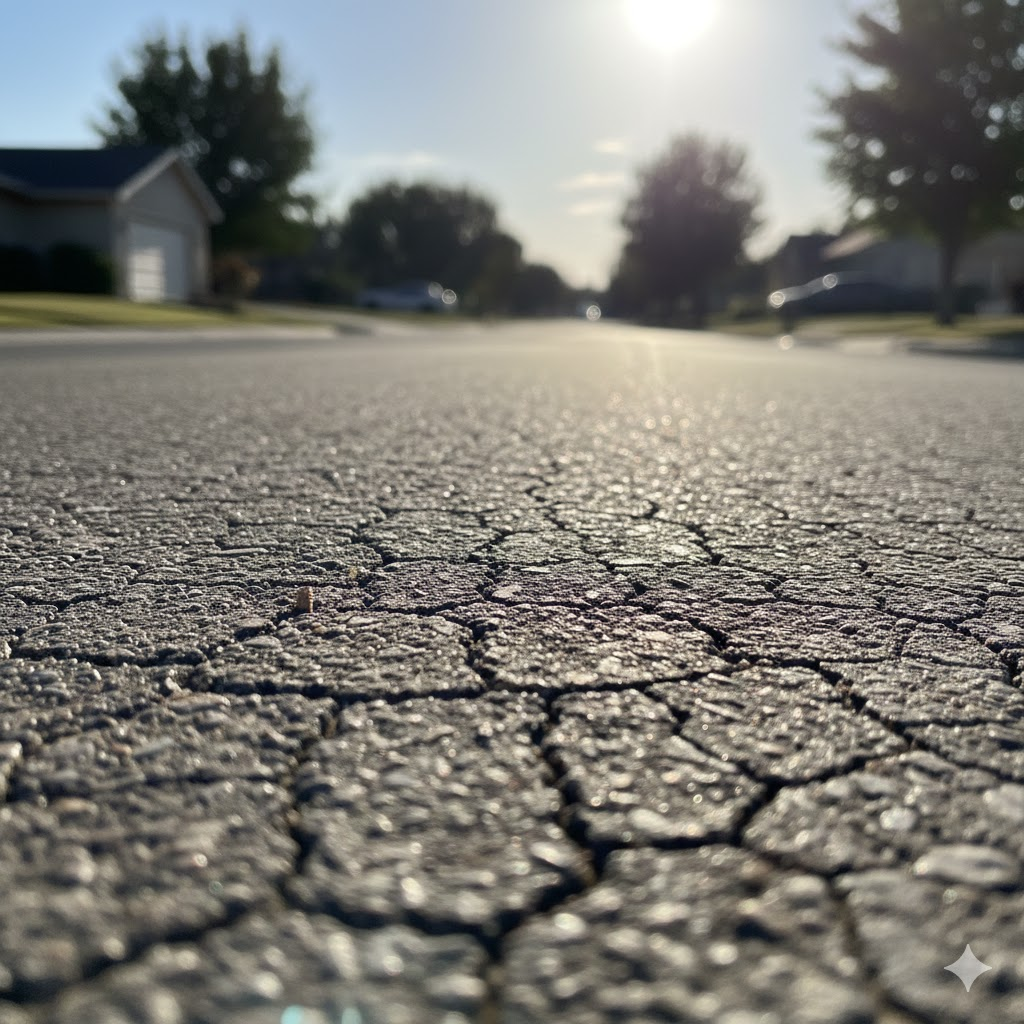
In cold climates, water enters the pavement and freezes. The ground then expands and contracts. A thin layer cannot absorb this pressure, so it cracks and lets in more moisture. These areas need a deeper base and thicker asphalt.
Hot Climates
Heat makes asphalt soft and flexible. Parked cars can leave tire marks, dents and surface ripples. Thicker asphalt spreads heat and pressure over more material, so the surface keeps its shape.
Clay and Sandy Soil
Clay soil swells and shrinks as it takes in and loses moisture. It keeps moving under the pavement and can lose strength when saturated. Clay needs a deeper base, good drainage and thicker asphalt. Sandy soil drains well and moves less. With proper compaction it can support slightly less thickness.
Drainage Comes First
Grade the driveway to shed water away from the home and garage. A slope of about 1 percent, or roughly 1/8 inch per foot, is commonly recommended. Fixing drainage often does more than adding asphalt.
Thin vs Thick Asphalt
Thickness affects performance every year. Thin asphalt may look fine at first, but it lacks the strength to handle vehicle weight, moisture and temperature swings.
| Too Thin Asphalt | Proper Asphalt Thickness |
|---|---|
| Cracks can appear in 1 to 2 years | Can last 15 to 25 years with proper installation |
| Oil stains soak in and stay | Oil stays on the surface and cleans up easily |
| Frequent patching and repairs | Minimal patching over time |
| Resealing every 1 to 2 years | Resealing every 3 to 5 years |
| Higher lifetime cost | Lower long term cost |
Sealcoat also bonds better to a thicker surface, so applications can be spaced further apart, as shown in our Resealing Asphalt Driveway guide. Sealcoating protects the surface but does not replace adequate asphalt or base depth.
Thickness and the Cost of Your Driveway
Thicker asphalt needs more material and labor, so it costs more to install. That higher upfront price usually pays off over the life of the pavement. Thicker asphalt needs fewer repairs and less frequent sealing.
Thin asphalt saves money at first. Over time it leads to the following.
-
More frequent patching
-
Earlier resurfacing or replacement
-
More water damage and cracking
-
Higher maintenance costs
Repair bills often exceed what the correct thickness would have cost. This is why thickness plays such a big role in the figures in our How Much Does It Cost to Asphalt a Driveway? pillar guide.
What Contractors Should Install
Many homeowners miss that asphalt thickness means different things before and after rolling. Contractors place asphalt loose, and rollers compress it. A driveway sold as 2 inches can end up near 1.5 inches after compaction, which is too thin to last.
Put the Details in Writing
Always ask for finished, compacted thickness, such as 3 inches compacted and measured after rolling. A good proposal should state the following.
-
Total driveway area
-
Compacted asphalt thickness
-
Base type, depth and compaction
-
Subgrade repair method for soft areas
-
Drainage plan and final slope
-
Number of asphalt lifts
-
Warranty terms and exclusions
Avoid any quote that says only “2 inches of asphalt” without naming the base or the drainage plan.
One Lift or Two
A 2 to 3 inch driveway usually uses one compacted surface lift. For heavy use sections of 3 to 4 inches, contractors often place two lifts, such as a 2 inch binder course and a 1 to 1.5 inch surface course. Each lift must be thin enough to compact fully. Pouring one thick layer does not make a better driveway. Good materials also affect how long the driveway lasts.
Signs Your Current Driveway Is Too Thin
If your asphalt is already failing, thickness may be the cause. Thin asphalt cannot carry daily vehicle weight or resist water. Over time it develops damage that sealing cannot fully reverse. Watch for these signs.
-
Tire marks or holes where cars park
-
Waves, dips or uneven areas
-
Cracks within one to two years
-
Oil spills that never wash away
-
Repaired potholes that return
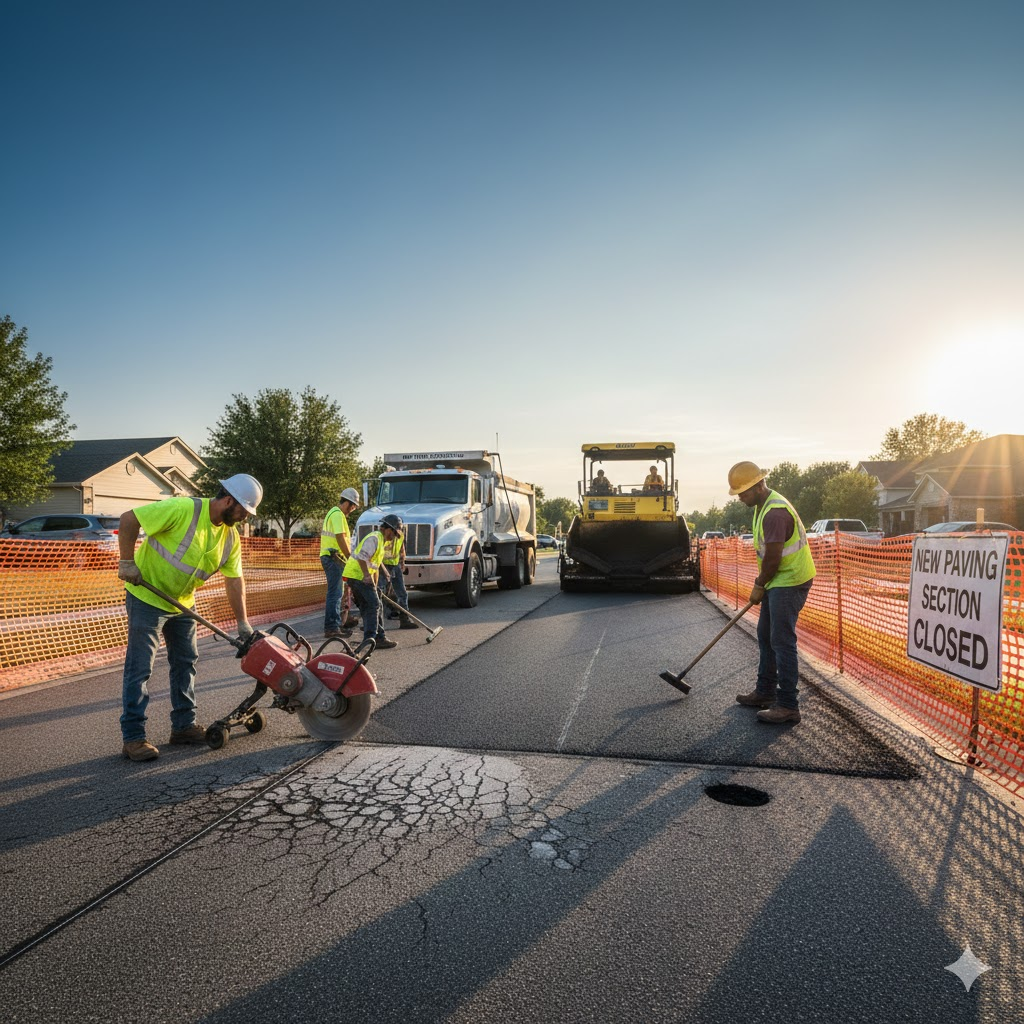
Overlay or Replace
An overlay cannot fix an unstable base. Adding 1.5 to 2 inches over a failing driveway may improve looks for a while but will not stop repeat cracking or dips. Use the table below as a guide.
| Condition | Best Approach |
|---|---|
| Sound asphalt with minor wear | Overlay after cleaning and repair |
| Alligator cracking, potholes or base failure | Full depth repair or replacement |
| Ponding or major low spots | Regrade and fix the base first |
| One failed area | Patch or full depth repair |
Most of these cases need proper diagnosis and the methods in our Asphalt Patching Guide, since the surface needs structural repair.
Conclusion
Asphalt thickness shapes everything from cracking and oil stains to how often you patch and reseal. A thin driveway may look fine for a short time, but constant repairs and early wear will hurt your budget. A properly thick driveway on a strong base lasts longer, protects better and costs less over its life.
Choosing the right thickness today can save you thousands in repairs, patching and resurfacing. Get your free quote by calling at 404-414-719 or visiting New pointe Contracting.