- January 06, 2026
Asphalt drives are tough and appealing, but they are prone to damage. The cracks will occur over time even in the best-installed driveway unless it is maintained. The good news? A majority of the damage can be avoided with some simple practice. The North Georgia homeowners can increase the life of their asphalt by several years.
What Makes Asphalt Crack?
Asphalt is flexible; it is meant to resist changes of temperature and vehicle pressure. However, under the influence of constant loading, pressure, or weight, the substance that helps the material to stick together starts to damage. When the surface becomes weak, cracks start showing, and they gradually widen when not treated.
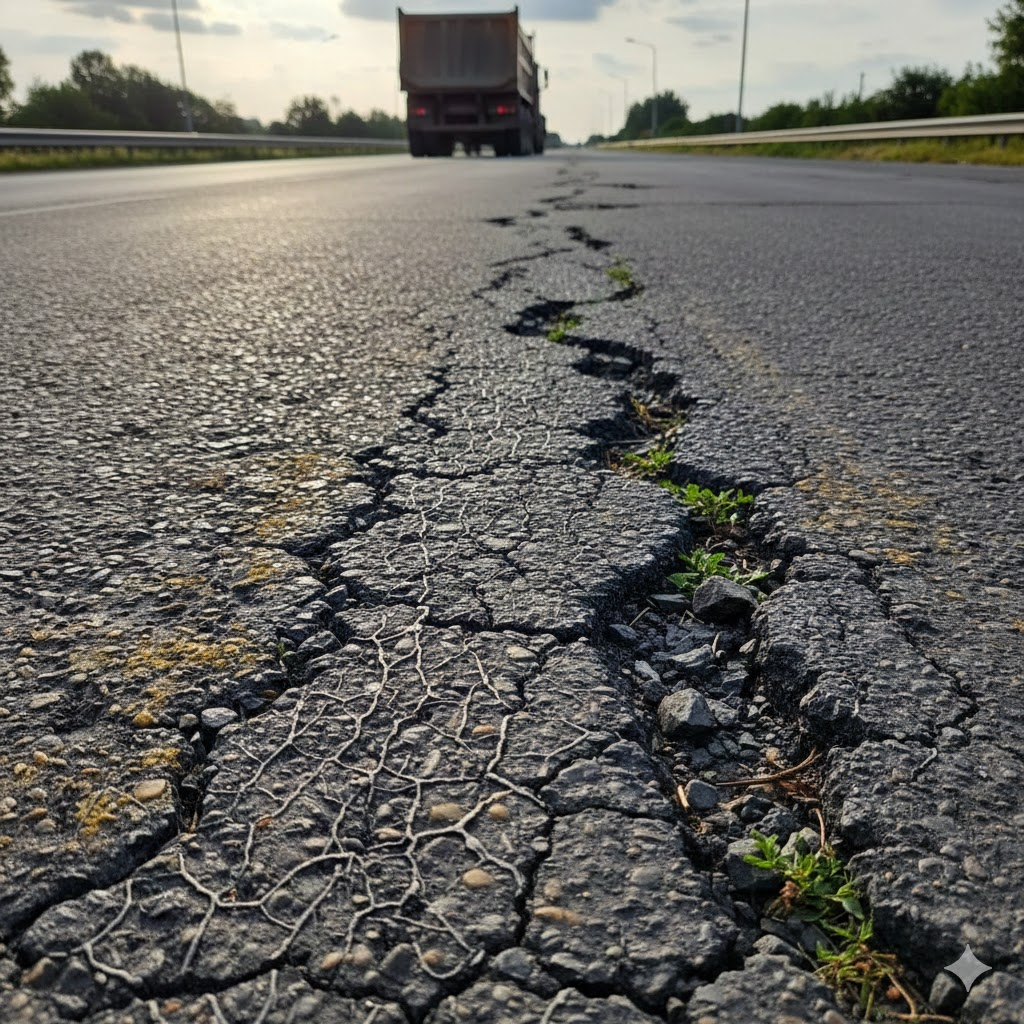
Top reasons for driveway cracks.
1. Excessive Load and Heavy Vehicles
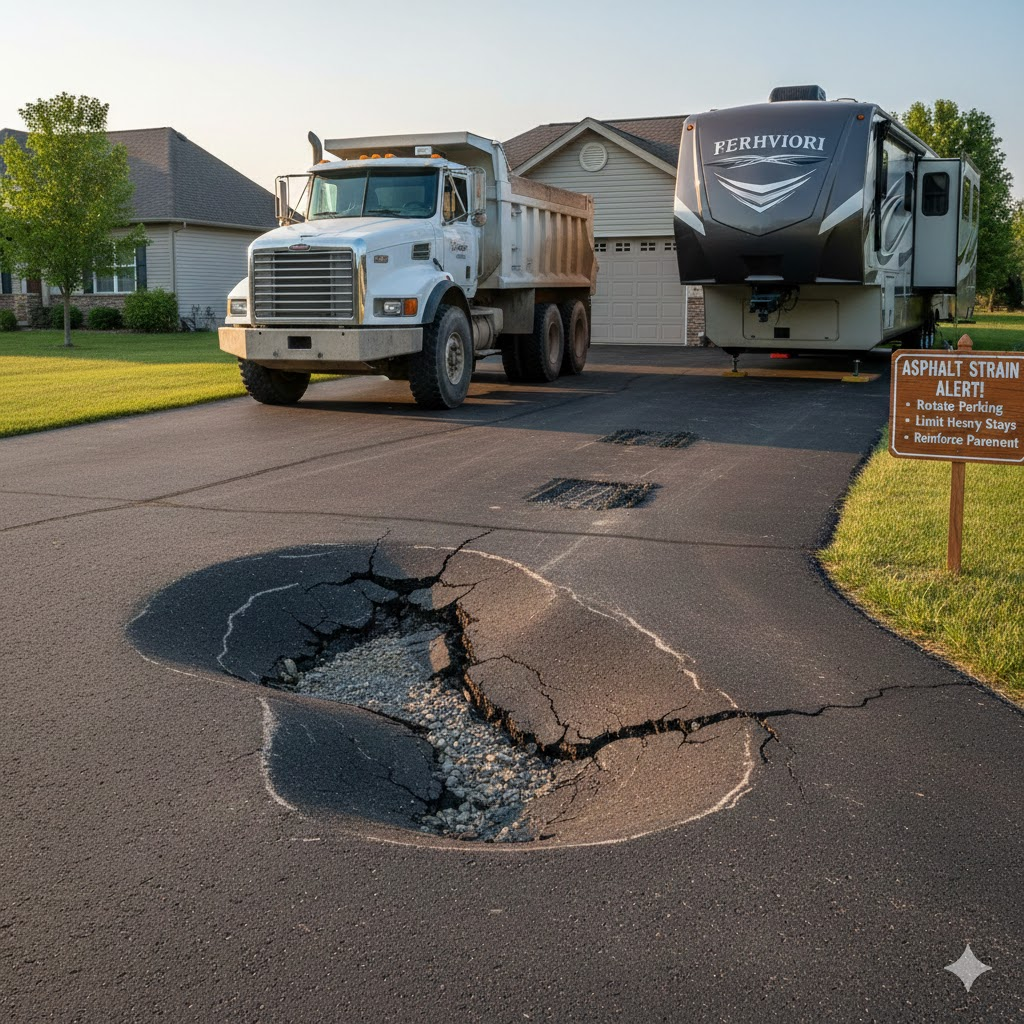
Asphalt will be able to accommodate ordinary cars and SUVs, but on a regular basis, it is the heavy trucks, RVs, trailers, or construction machines that will constantly put a strain on the pavement. After some years, the load will make the asphalt bend way out of proportion, leading to surface cracks, depressions, and structural vulnerability.
Prevention Tips:
When parking heavy cars on the driveway, do not spend too much time.
Parking spaces should be rotated rather than lying in the same area.
Install paving reinforcement in case your house is frequented by heavy vehicles.
2. Freeze-Thaw Cycles.
Weather is the main destroyer of driveways in cold areas. Here’s what happens:
-
Water seeps into tiny cracks.
-
Cold water solidifies and extends the crack.
-
When the ice water melts, it settles deeper.
The process repeats itself, and cracks are getting bigger by each season.
During hot summers, asphalt becomes soft and more flexible and cracks appear on the surface.
How to Spot It:
-
Spiderweb cracks
-
Pothole formation
-
Cracks that enlarge following winter.
3. Natural Aging:
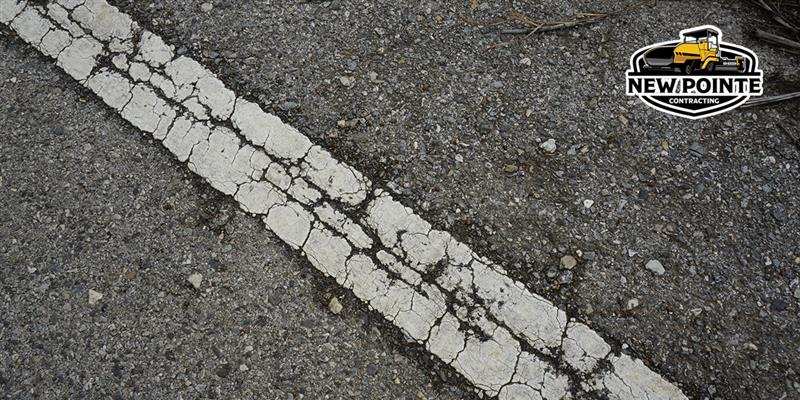
Any asphalt surface will damage with time even with flawless maintenance. The binder is dried gradually by the UV rays and oxygen, and the surface becomes brittle. Old asphalt can no longer bend under pressure, then the cracks begin to appear, and there is no particular reason.
Signs of Aging Asphalt:
-
Faded gray color
-
Rough, brittle texture
-
Several surface cracks on the surface.
4. Poor Preparation of Base and Lack of Good Installation
Poor installation is one of the most widespread and costly reasons for cracking. A driveway is as solid as the surface on which it is built. Failure by the contractor to properly compact the soil, apply the wrong asphalt mix, or apply the same on wet ground will cause the surface to crack long before the time it should.
Red Flags of Bad Installation:
-
Uneven or wavy surface
-
Premature cracks in 1-2 years.
-
Ponding of water at some points.
5. Water Damage and Drainage Problems.
Water causes asphalt driveway failure. When there are puddles in your driveway, an inappropriate slope, or water in the cracks, the layer that underlies them becomes fragile.
When the foundation is weak, the pavement over it becomes unsupported, and cracks begin to appear.
Warning Signs:
-
Standing water after rain
-
Soft or spongy spots
-
Fissures developed in a straight way (generally along drainage lines).
6. Tree Roots and Soil Movement
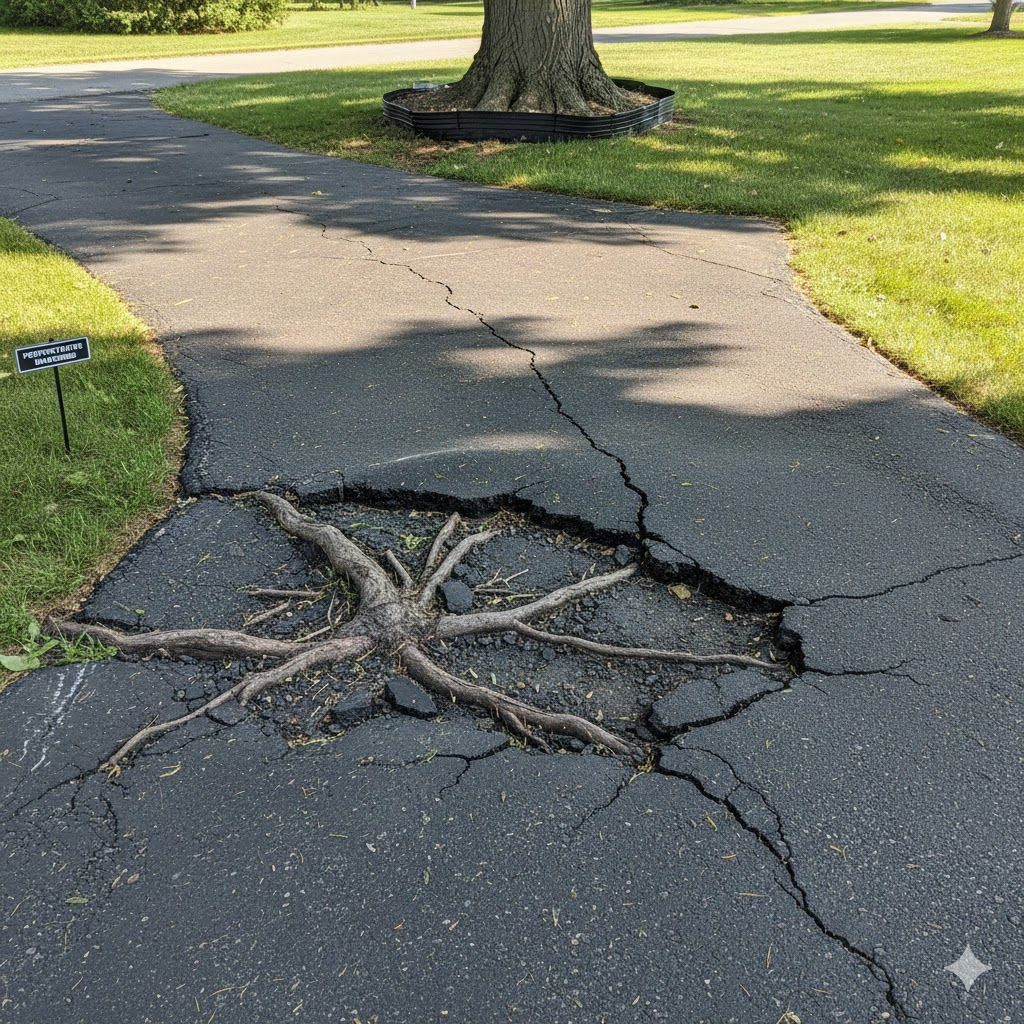
The roots of trees do not have to be very large in order to do harm. They swell and press under the asphalt, which leads to cracks, raised parts, or buckling.
The soil can also be unstable or compacted poorly, which causes the soil to move with time, resulting in uneven settling and cracks on the surface.
Prevention Tips:
-
Plant trees at a distance of 10-15 ft away from driveways.
-
Install root barriers.
-
Before installation, have soil correctly compacted.
How to Avoid the Damage of Driveways?
1. Sealcoat Every 2–3 Years
One of the most inexpensive and also simplest methods of providing protection to asphalt is sealcoating. It protects the surface against UV rays, water, oil, and other chemicals. It makes the asphalt flexible and strong.
Benefits of Sealcoating:
-
Extends lifespan by 5–10 years
-
Prevents oxidation
-
Helps resist cracking
2. Fix minor cracks before it is too late.
A little crack today would be a pothole tomorrow. Sealing the cracks does not allow water to penetrate the base to continue the damage.
Fix cracks when they are:
-
1/8” to 1/2" wide
-
Straight or hairline cracks
-
Newly organized and not transmitted.
3. Enhance the Drainage System of the Driveway
Due grading will make sure that water does not move towards asphalt, but it moves off. Enhancing drainage will minimize any possibility of water intrusion and base erosion.
Simple fixes include:
-
Adding a French drain
-
Resloping the edges
-
Unblocking blocked gutters that pour down the driveway.
4. Sharp turning or parking on hot asphalt is to be avoided.
During hot summers, the asphalt becomes soft. The sharp turns of the steering wheel or intensive parking may scratch the surface and make premature cracks.
5. Keep the Driveway Clean
Asphalt gets weakened by oil, chemicals, and debris. To sustain its strength and its appearance, cleaning is performed.
Do this monthly:
-
Sweep debris.
-
Wash off oil stains.
-
Get weeds growing between cracks out.
Knowing the signs your asphalt pavement needs repair can help you address minor issues before they become costly replacements.
Best Method of Repairing Cracks?
The cost, condition, age, and long-term reliability of your pavement are factors that should be considered before deciding whether to repair or have a complete replacement. The following table will further subdivide the key factors in order to enable the property owners to make an informed, low-budget decision.
| Factor | When to Choose Repair | When to Choose Replacement |
|---|---|---|
| Extent of Damage | Minor cracks, surface wear, small potholes, early-stage alligator cracking. | Widespread deterioration, deep structural damage, large potholes, extensive alligator cracking. |
| Pavement Age | Pavement under 10–12 years old and still structurally stable. | Pavement older than 15–20 years or nearing the end of its design life. |
| Cost Considerations | Lower upfront cost; ideal for routine maintenance and extending pavement life. | Higher initial investment but more cost-effective long term when repairs become frequent. |
| Longevity After Work | Repairs typically last 1–5 years depending on method and traffic. | A full replacement can last 15–30 years with proper maintenance. |
| Appearance | Improves surface look but may still show patchwork if multiple repairs exist. | Fresh, uniform appearance that greatly enhances curb appeal. |
| Safety Impact | Good for eliminating hazards like potholes and trip risks when issues are small. | Best when damage is severe enough to compromise driving or walking safety. |
| Traffic Volume | Suitable for low to moderate-traffic areas like residential driveways or small lots. | Necessary for heavy-traffic commercial sites, industrial lots, or roads. |
| Water Drainage Issues | Minor drainage problems can be solved with patching or crack sealing. | Persistent pooling water, sinking, or grading issues require full reconstruction. |
| Long-Term Value | Ideal if you want to get a few more years out of your pavement before major work. | Recommended when long-term performance, durability, and ROI are priorities. |
Eco-Friendly Ways to Protect Your Asphalt Driveway
These techniques minimize wastage and enhance the driveway's performance:
-
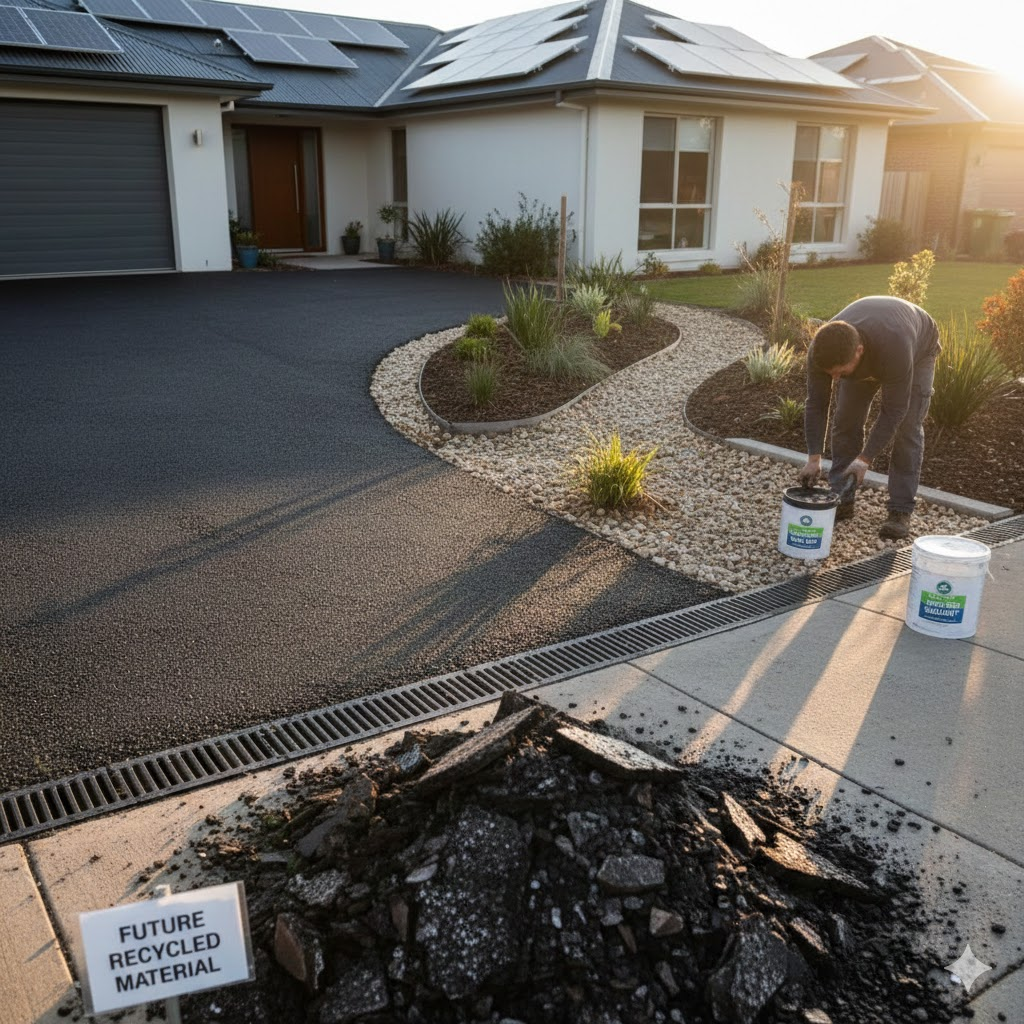
Recycled asphalt mixes should be used to resurface.
-
Choose low-VOC sealers.
-
Enhance water drainage to avoid erosion.
-
Use old asphalt when replacing new asphalt.
Conclusion
The asphalt driveways crack due to numerous reasons, such as the weather, excessive loads, water, age, or improper construction. However, given the appropriate maintenance approach, the majority of the damage may be avoided prior to its occurrence by the homeowners. Routine sealcoating and early action and proper drainage and quick repair of cracks can easily increase the life span of your driveway by 10–15 years.
Protect your driveway with our expert asphalt repair solutions. Call New Pointe Contracting today at 404-414-7192 for a free inspection!
.webp)